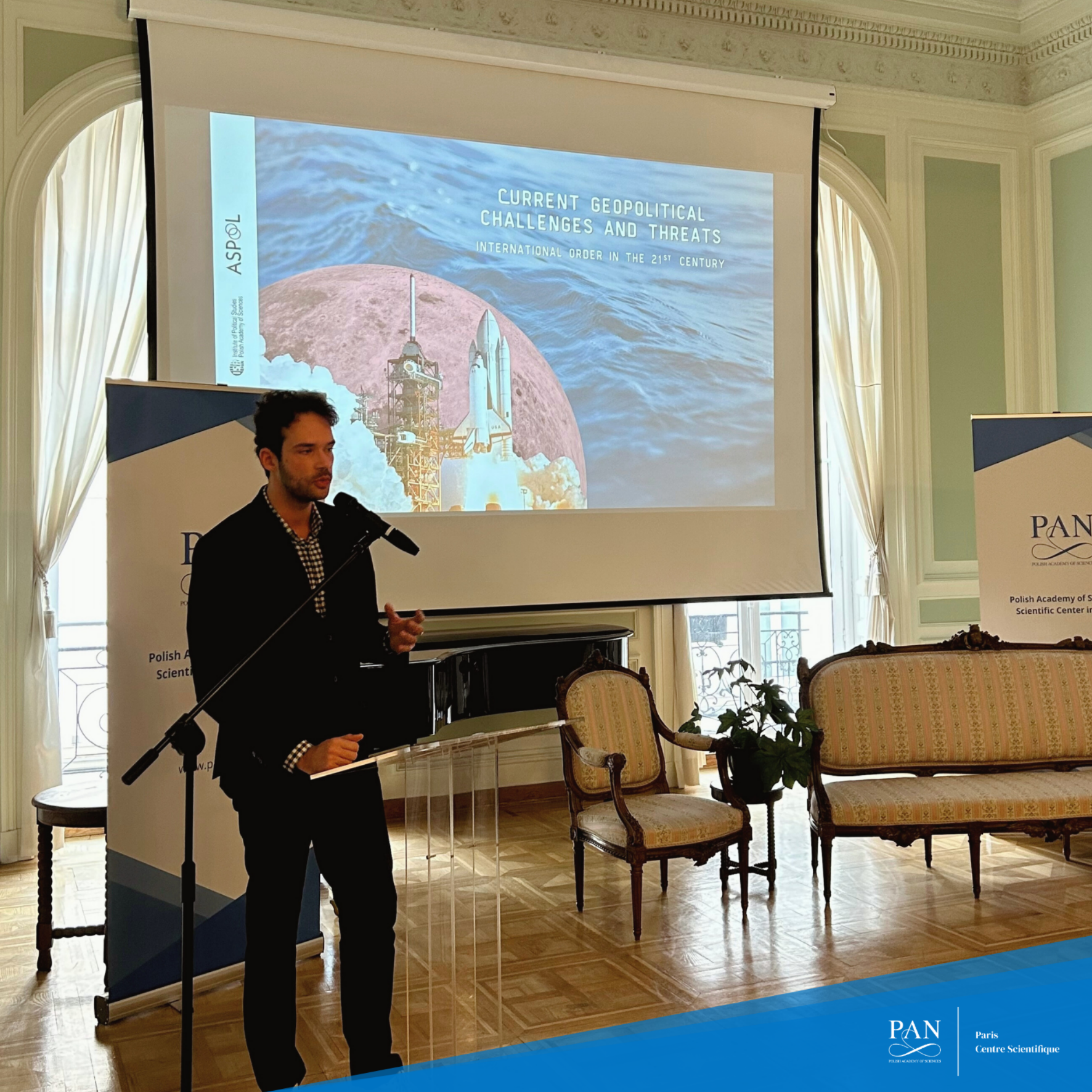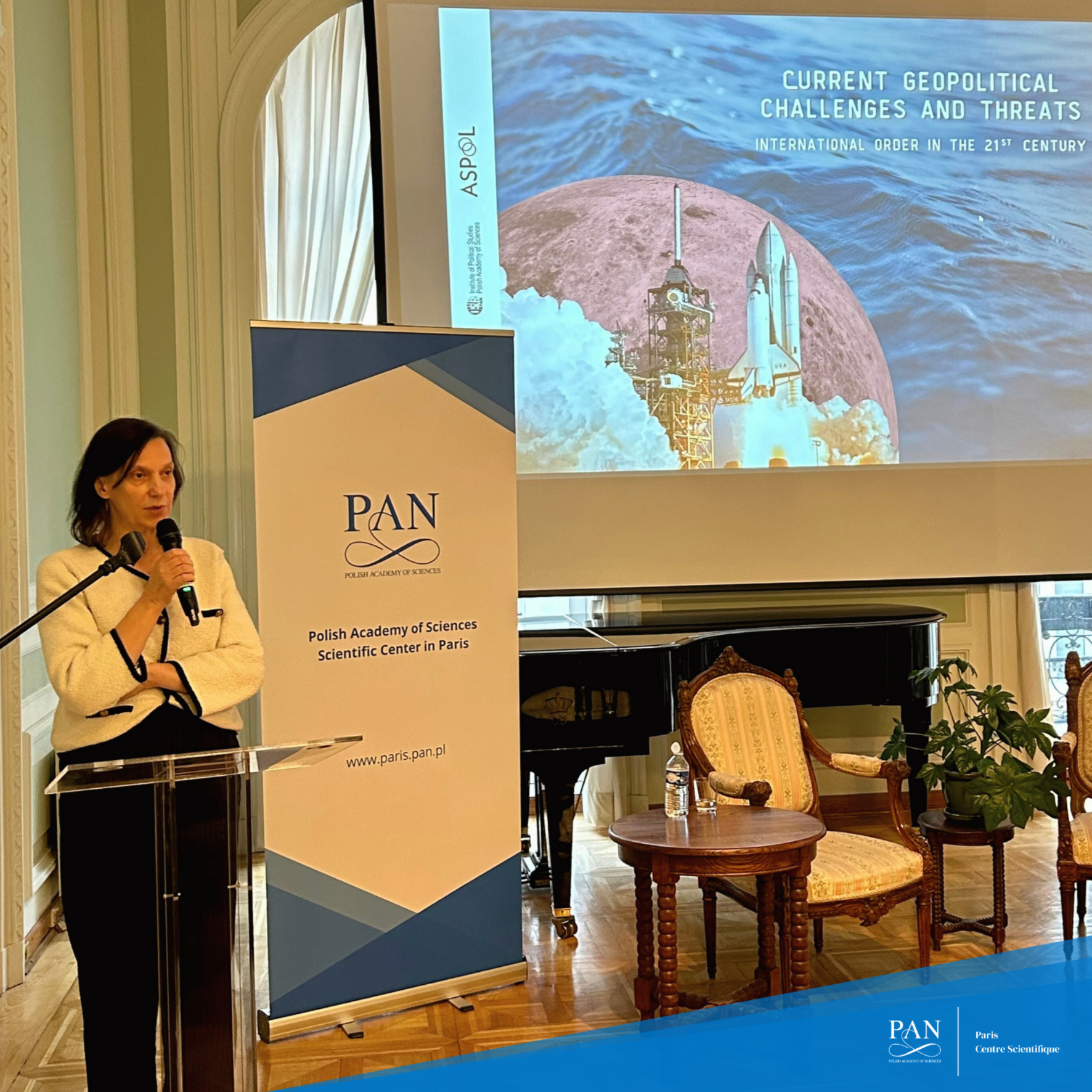


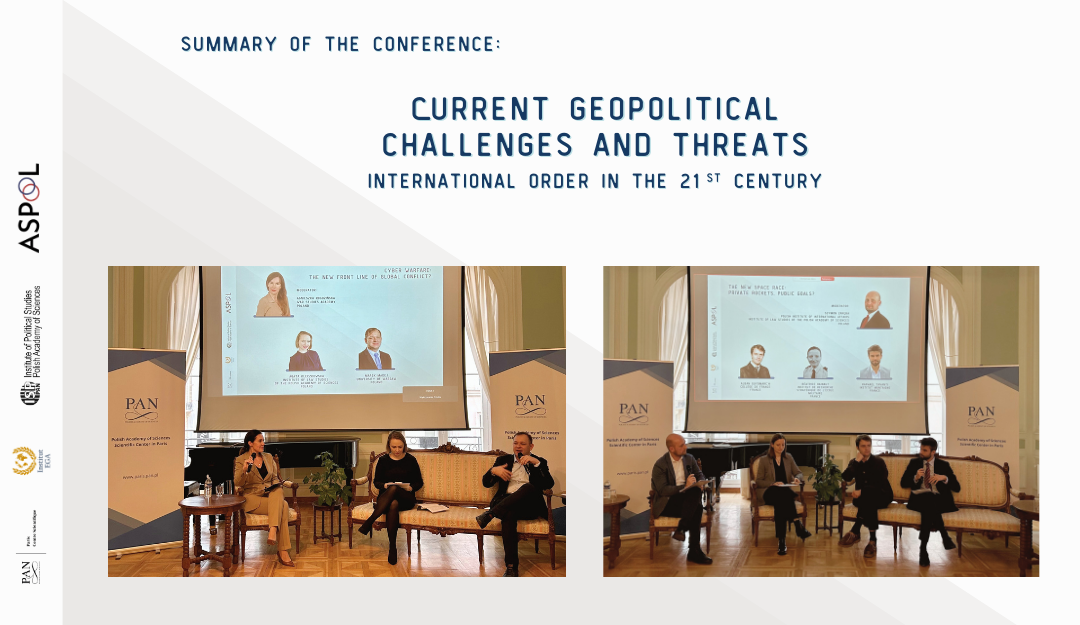
The conference, “Current geopolitical challenges and threats: international order in the 21st century”, organised by the Polish Academy of Sciences Scientific Centre in Paris in cooperation with the Institut d’Etudes de Géopolitique Appliquée, the Institute of Political Studies of the Polish Academy of Sciences and the Association des Etudiants Polonais en France, provided an opportunity to reflect in depth on the challenges shaping the contemporary international order. It also emphasised the growing complexity of global threats and the need to develop effective cooperation mechanisms.
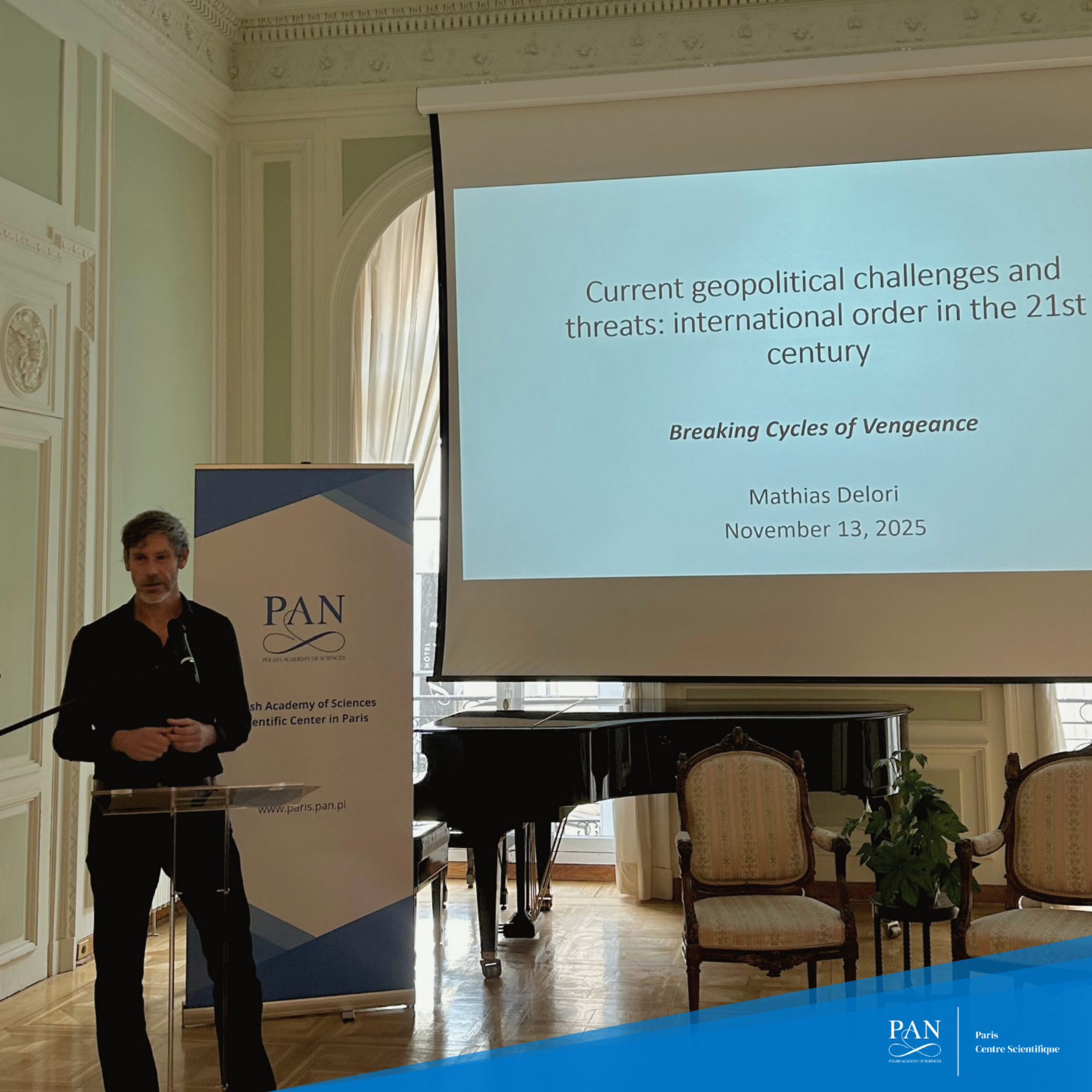
The keynote lecture, delivered by Professor Mathias Delori, “Breaking cycles of vengeance”, focused on analysing historical cases of violence and considering whether it is possible to break the spiral of revenge that fuels conflicts. From Franco-German relations after World War II and the Cold War to the global war on terror, Professor Delori highlighted the power of non-violent action and initiatives, emphasising the necessity of seeking alternative paths to building peace in a world where violence is still perceived as an effective tool.
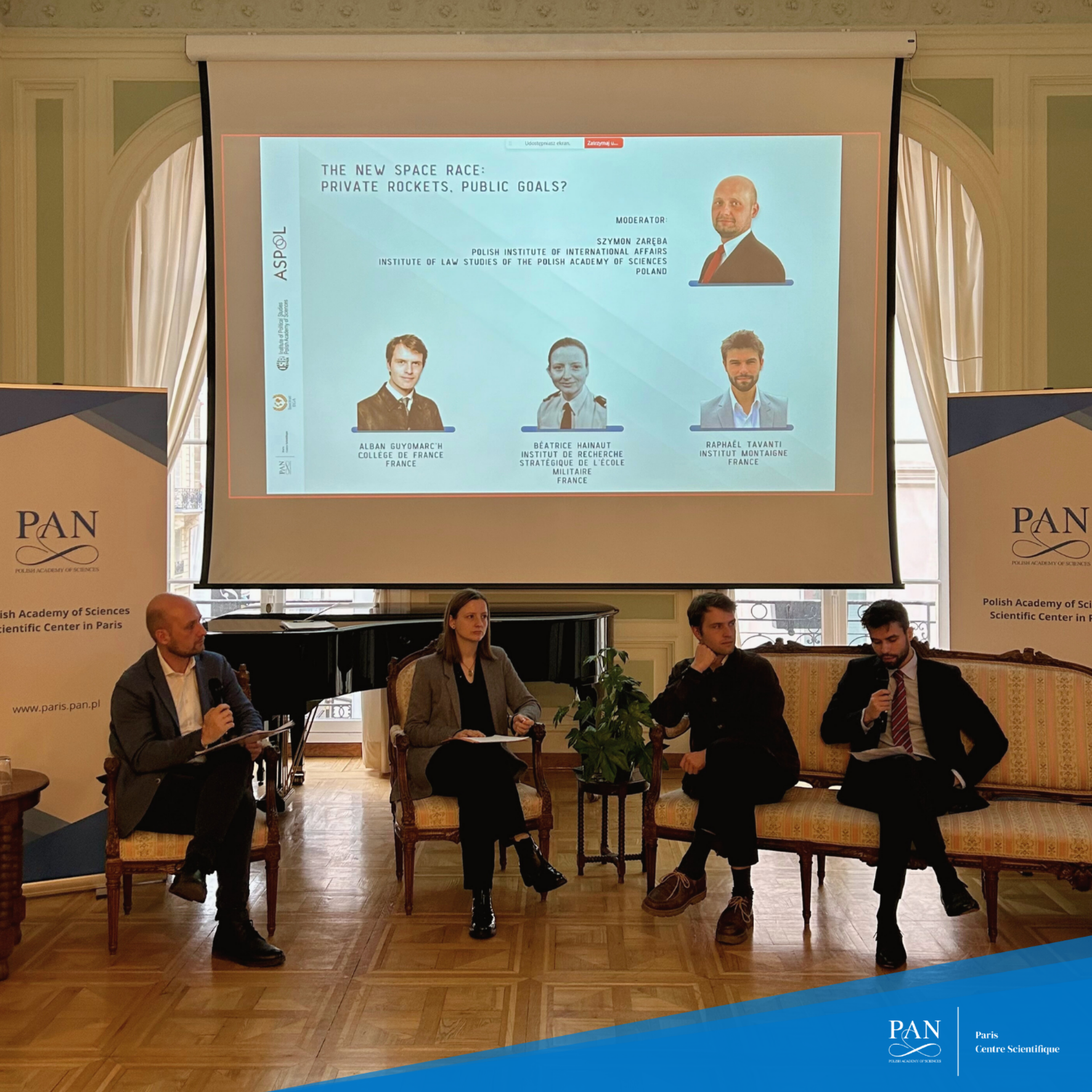
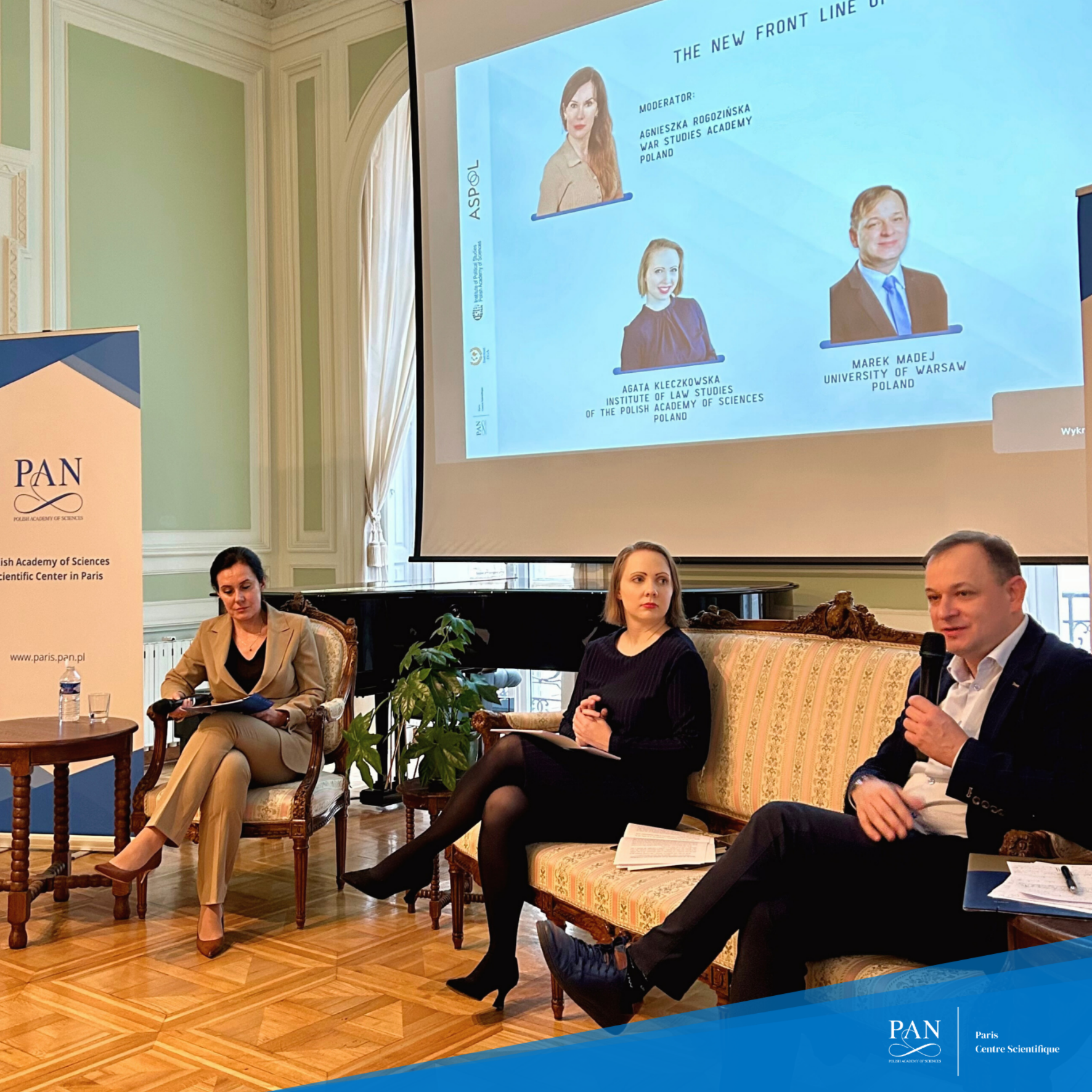
The conference programme featured presentations and panel discussions exploring strategic narratives that shape the global order, as well as the role of ESG in foreign policy. Of particular note were the debates “The New Space Race: Private Rockets, Public Goals?” – which addressed the growing involvement of private companies in space exploration – and “Cyber Warfare: The New Front Line of Global Conflict?”, which emphasised the significance of cyberspace as a new arena for rivalry between states and non-state actors.
During the conference, Antoine Godbert delivered a presentation on the return of Ratzel’s ideas in the context of contemporary geopolitical tensions. His talk, “The return of Ratzel”, showed how current processes – from the war in Ukraine to the digital revolution – revive old concepts of the organic state and the significance of networks and propaganda. It also raised questions about a new “Renaissance” era in international relations. Dr Pierre Thévenin addressed the issue of protecting submarine cables in the Baltic Sea region, highlighting legal gaps in UNCLOS and proposing legislative and technical solutions to strengthen the resilience of critical infrastructure. In her presentation, “Beyond states: armed groups and the future of international relations”, Karolina Siekierka drew attention to the growing role of armed groups in shaping international relations. Using the conflict in Yemen and the activities of the Houthis as an example, she demonstrated how non-state armed actors can assume state-like functions, influence traditional political players and become partners in peace negotiations. This raises questions about the future of international law and its effectiveness.
The conference concluded with reflections on how to combine historical, legal, technological and ethical perspectives in order to build a more resilient and sustainable international system in the face of increasing threats and uncertainty. The event’s key message was the need to redefine security strategies in a spirit of responsibility and cooperation, considering both traditional and emerging areas of competition.