


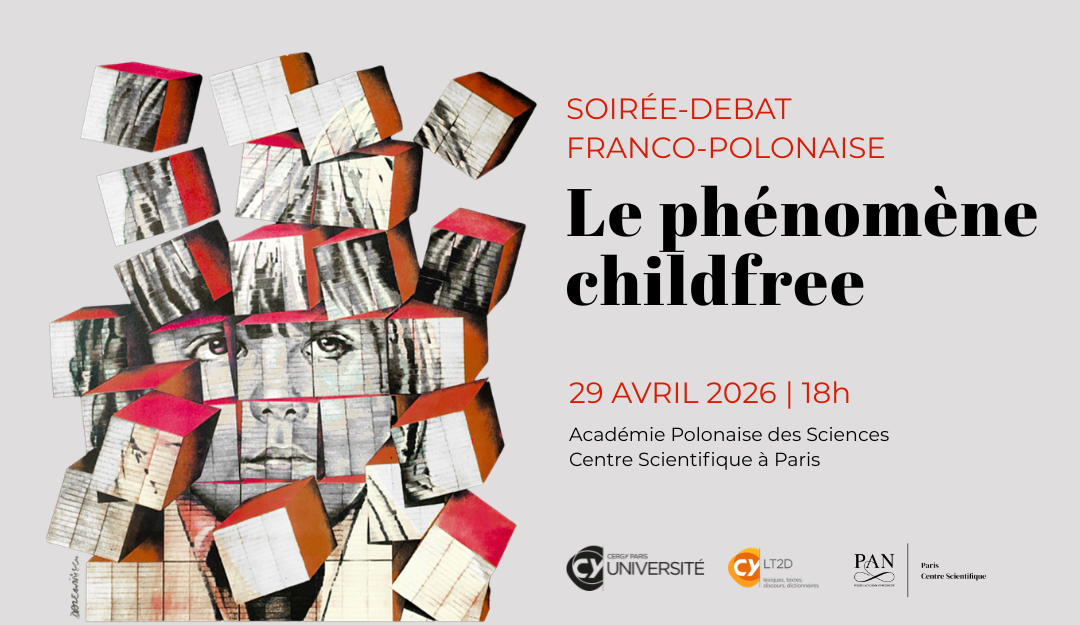
Childlessness by choice – French-Polish debate
Childlessness by choice is a phenomenon that has been observed for many decades and has gained particular momentum in recent years. According to a 2022 IFOP survey, one in three French women of childbearing age say they do not wish to have children. A trend that was once marginal and viewed as an unconventional lifestyle choice has now become a widespread and socially accepted option. Similar trends are evident not only in Western countries but also in many developing nations.
Advances in contraception have meant that the decision to become a parent is no longer a matter of necessity, but has become a conscious choice. This naturally leads to questions about the meaning and justification of having children in the modern world. Does the current reality – marked by uncertainty, a crisis of trust and a sense of lack of prospects – encourage people to forego motherhood and fatherhood? Are rising living standards and economic development at odds with the desire to have children? To what extent has our understanding of time and the meaning of life changed, now that an individual’s life story may end with themselves? What role do new ideologies, cultural shifts and reinterpretations of religion play in defining contemporary existence?
These were the very issues addressed during the conference organised under the auspices of the Institut de France in October 2024. The event, which brought together demographers, ethicists, philosophers, anthropologists and doctors, attracted widespread interest. Its outcome is the book “Sans enfants par choix, le phénomène child free”, edited by Chantal Delsol, Gemma Durant and Joanna Nowicki, published in 2025 by Les Éditions du Cerf.
Continuing this interdisciplinary reflection, the Polish Academy of Sciences Research Station in Paris and the LT2D Laboratory at CY Cergy Paris Université are organising a debate on the phenomenon of child-free living by choice, this time from a Polish-French perspective. The event will bring together experts from both countries, which – despite shared demographic challenges – have different social, cultural and economic contexts.
The debate will provide an opportunity to compare French and Polish research and interpretations, as well as to consider the extent to which differing models of the family, social policy and cultural narratives influence decisions regarding having children. The meeting aims not only to bring the two perspectives closer together, but also to deepen European reflection on one of the key demographic challenges of the 21st century.
Participants discussion:
- Prof Chantal Delsol (Institut de France) – philosopher, historian of political ideas, writer
- Joanna Nowicki (CY Cergy Paris Université) – cultural anthropology, intercultural communication
- Gemma Durant (Doctor of Medical Sciences) – gynaecologist, writer
- Gérard-François Dumont (Sorbonne Université) – geographer, economist and demographer
- Claude Habib (Université Sorbonne Nouvelle – Paris 3) – French literature
- Dr Maja Łoś (Nicolaus Copernicus University in Toruń) – psychologist, educator, Doctor of Social Sciences, sociotherapist
- Iwona Sadowska-Krawczenko (Nicolaus Copernicus University in Toruń) – paediatrician, neonatologist; Dean of the Faculty of Medicine at Collegium Medicum in Bydgoszcz
Registration by email: secretariat@paris.pan.pl
By registering for the event, you accept the terms and conditions regarding the protection of personal data.