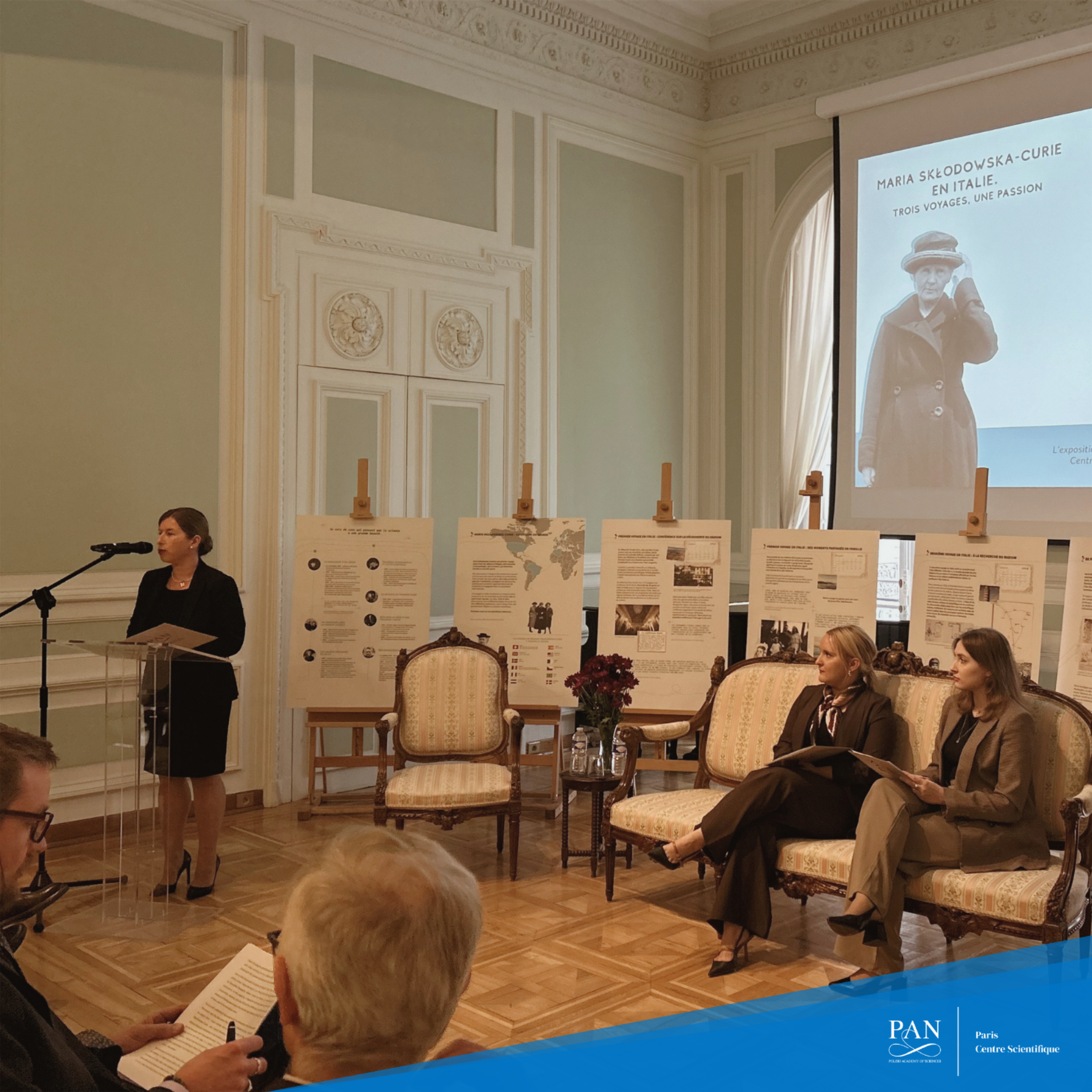


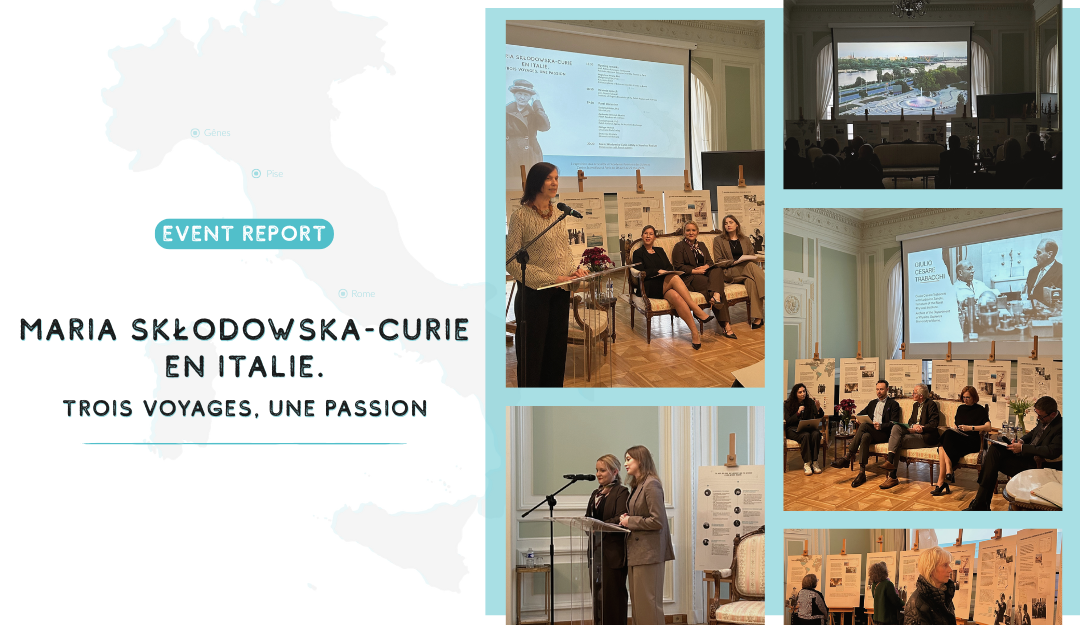
On 10 April 2026, the Polish Academy of Sciences Scientific Centre in Paris hosted an event dedicated to Maria Skłodowska-Curie and her connections with the Italian scientific community. Researchers, science historians, and enthusiasts of one of the most eminent scientists in history gathered for the occasion. The event presented Maria Skłodowska-Curie as a researcher, traveller and active participant in the international scientific community, thereby highlighting the importance of cross-border scientific mobility and cooperation.
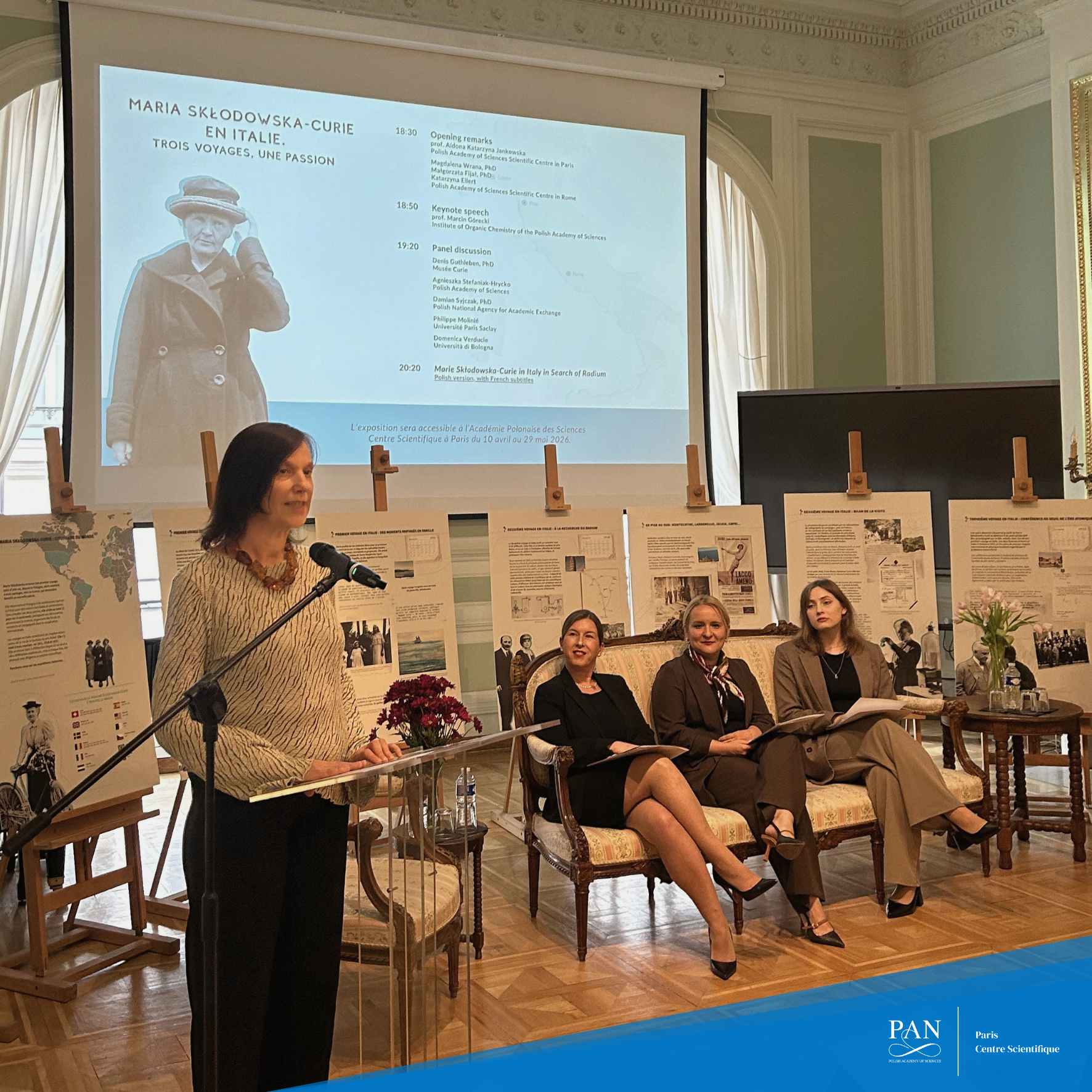
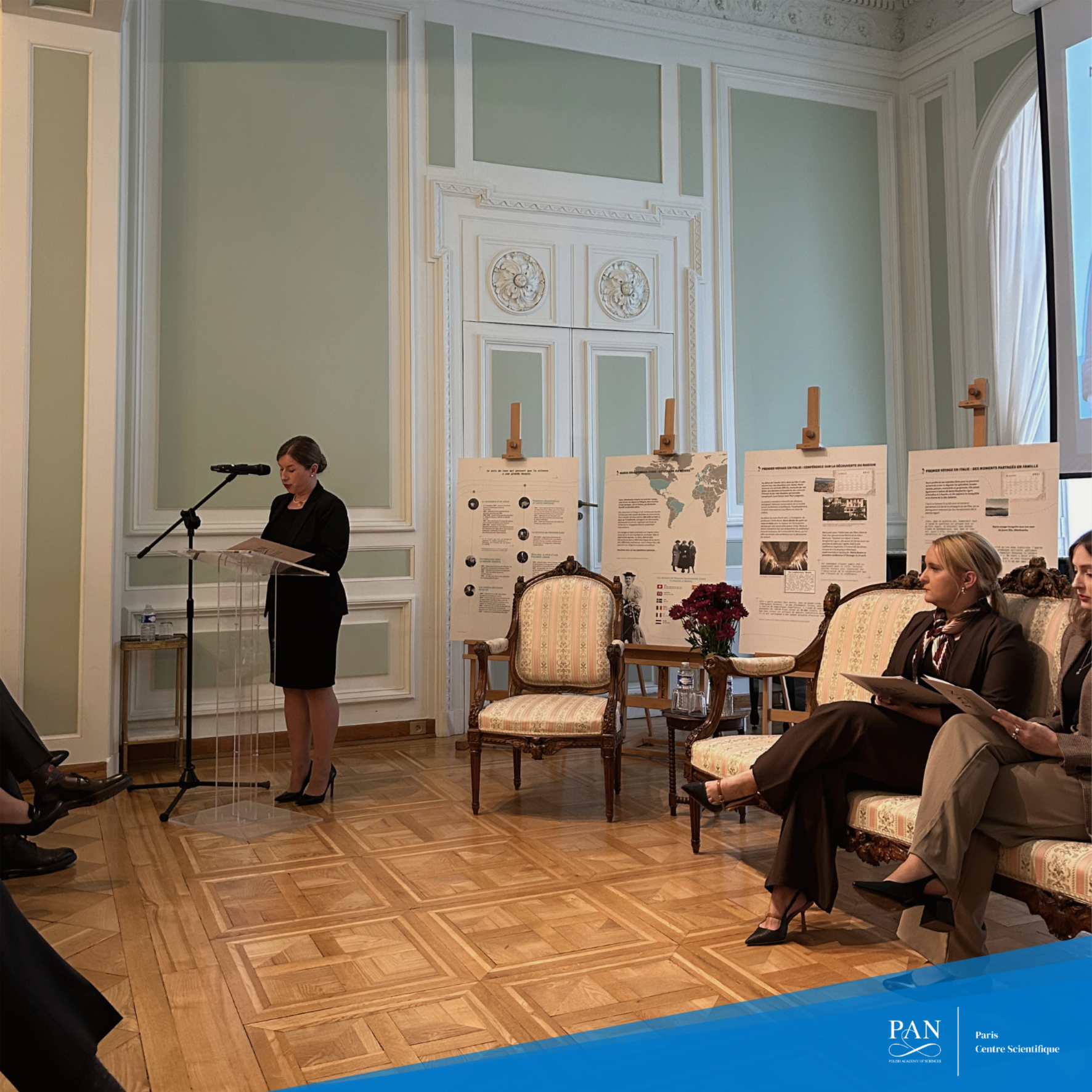
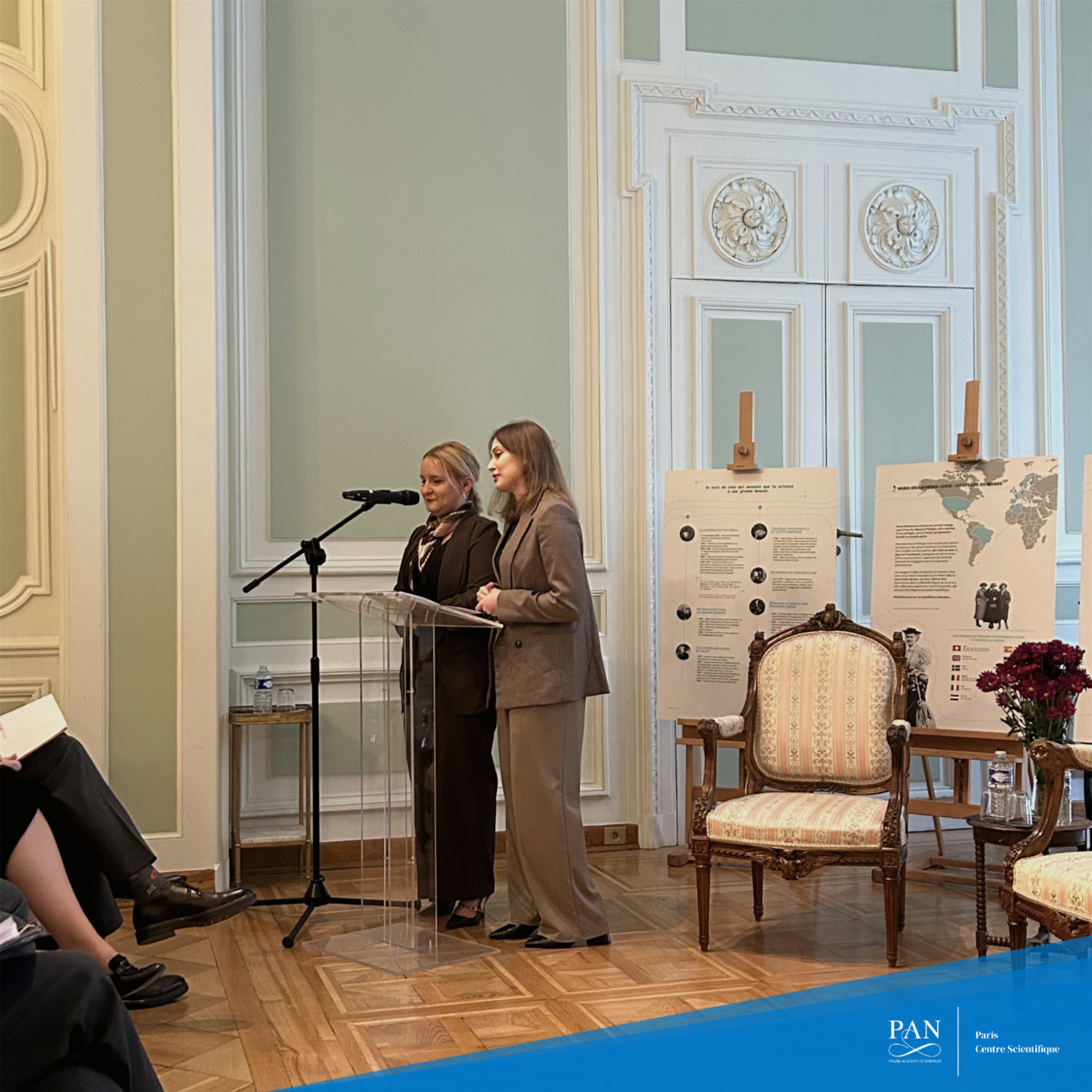
Professor Aldona Katarzyna Jankowska, Director of the Polish Academy of Sciences Scientific Centre in Paris, opened the event, followed by representatives of the Polish Academy of Sciences Scientific Centre in Rome – Magdalena Wrana, PhD, Małgorzata Fijał, PhD, and Katarzyna Ellert. As the initiators of the project, they presented the theme of the event to the participants and provided an insight into the design of the exhibition.
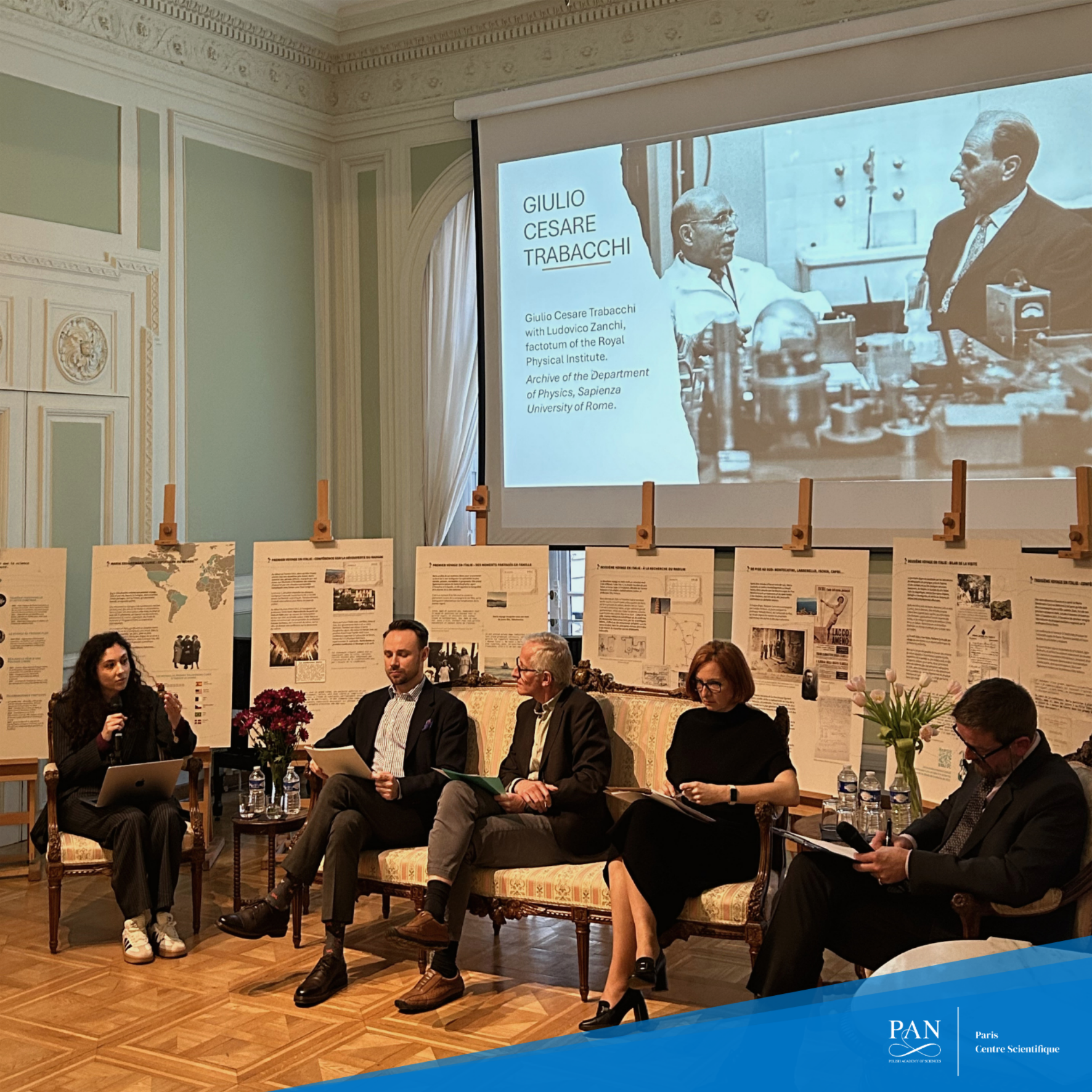
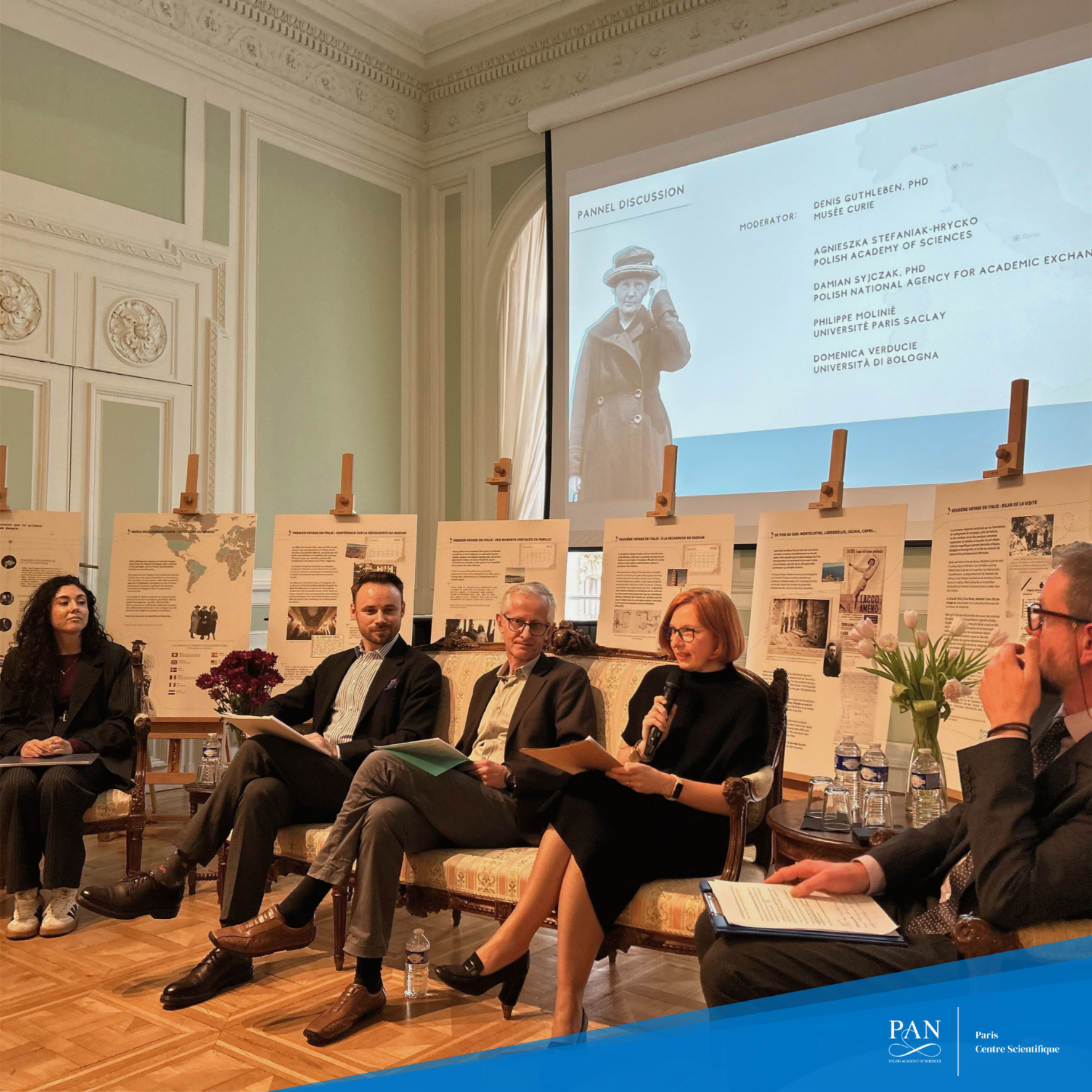
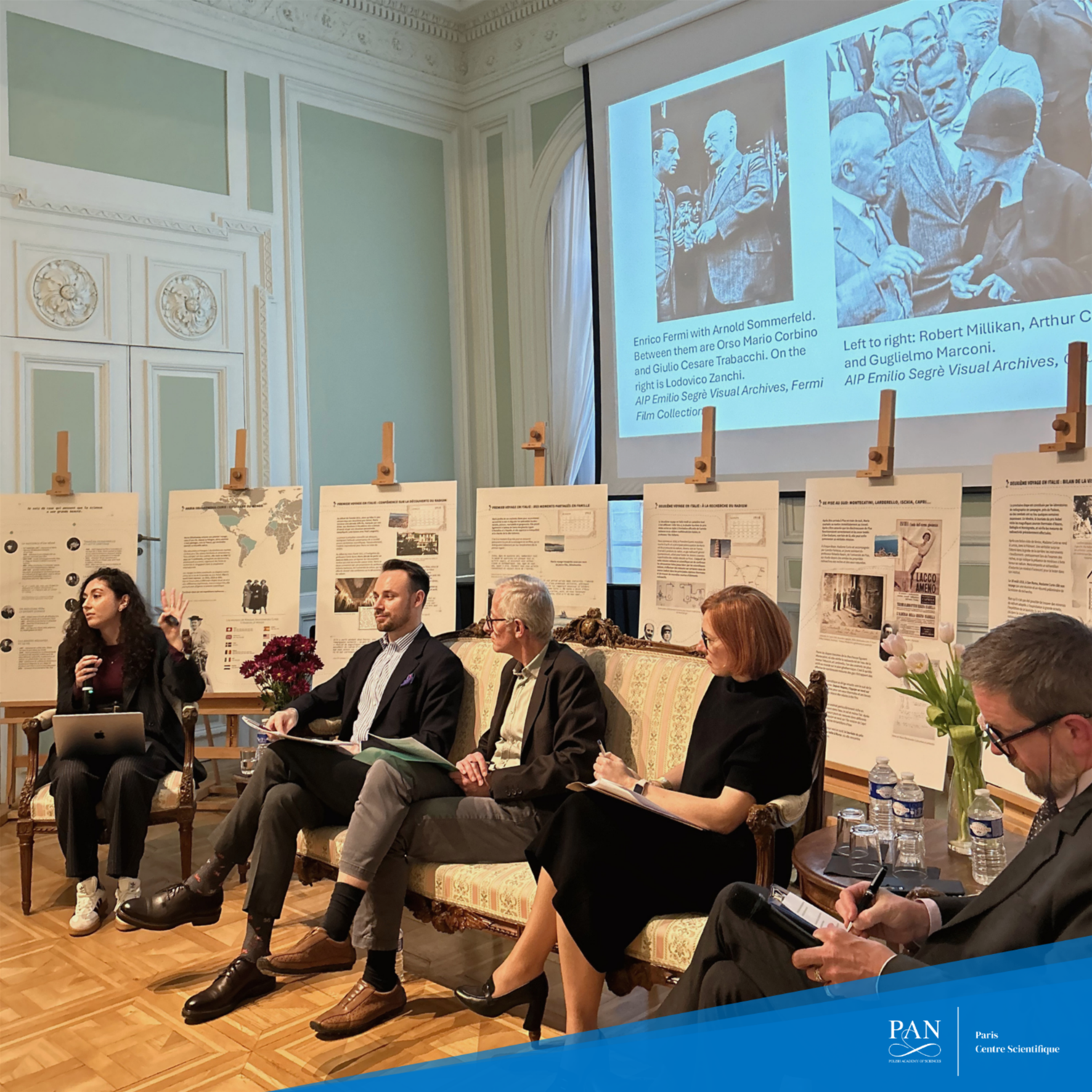
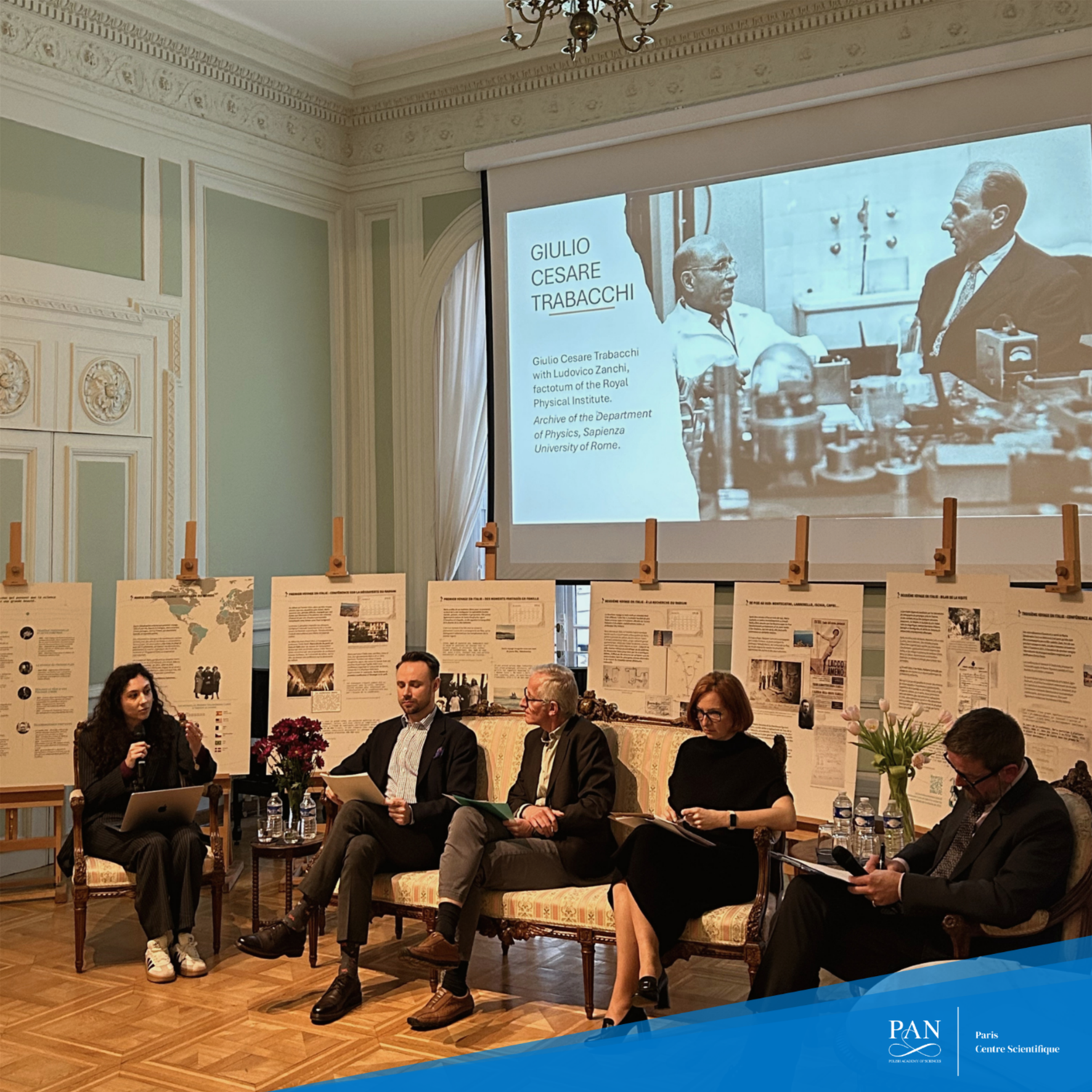
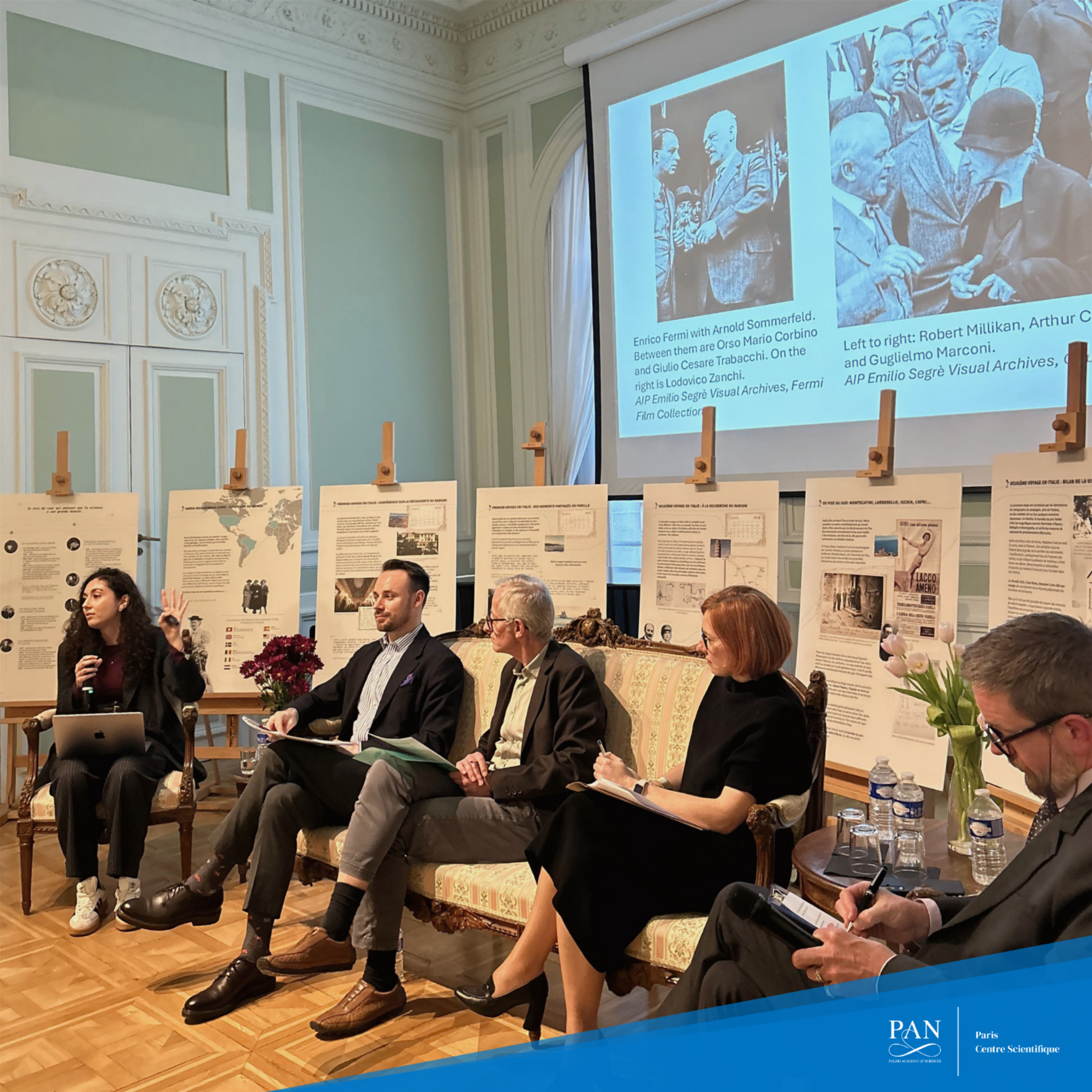
The highlight of the programme was a lecture by Professor Marcin Górecki entitled “Beyond the Laboratory: Three Journeys of Maria Skłodowska-Curie in Italy”, outlining the scientific and historical context of the scientist’s travels in Italy and their influence on research into radioactivity. This was followed by a roundtable discussion moderated by Denis Guthleben, PhD, Director of the Musée Curie in Paris, with representatives from the scientific community in attendance – Agnieszka Stefaniak-Hrycko (Polish Academy of Sciences), Damian Syjczak, PhD (Polish National Agency for Academic Exchange), Philippe Molinié (University of Paris-Saclay), and Domenica Verducci (University of Bologna).
The discussion centred on several key themes inspired by Maria Skłodowska-Curie’s time in Italy. The first was the international nature of science and mobility. The speakers emphasised that a firm belief in the international nature of science and the need for cross-border cooperation was a common thread running through Maria Skłodowska-Curie’s three trips, which were for scientific, research and conference purposes. Another topic addressed was the development of science in Europe through cooperation networks, highlighting the importance of the international scientific relationships that connected Maria Skłodowska-Curie with leading scientists of the time such as Becquerel, Volterra and Fermi. These networks played a vital role in the emergence of a modern, globalised approach to science, as well as in the development of research into radioactivity.
The discussion then turned to the influence of Maria Skłodowska-Curie’s work on the development of science in Italy. Particular emphasis was placed on the significance of her visit in 1918, which led to an increase in research into radioactive substances and the establishment of such research within Italian institutions. Finally, the discussion addressed the impact of Maria Skłodowska-Curie on the evolving perception of women’s roles within scientific institutions, and the continued relevance of these issues.
The speakers emphasised that the Nobel Prize winner’s time in Italy allows us to see her not only as an eminent researcher, but also as a socially committed individual and an active member of the international scientific community.
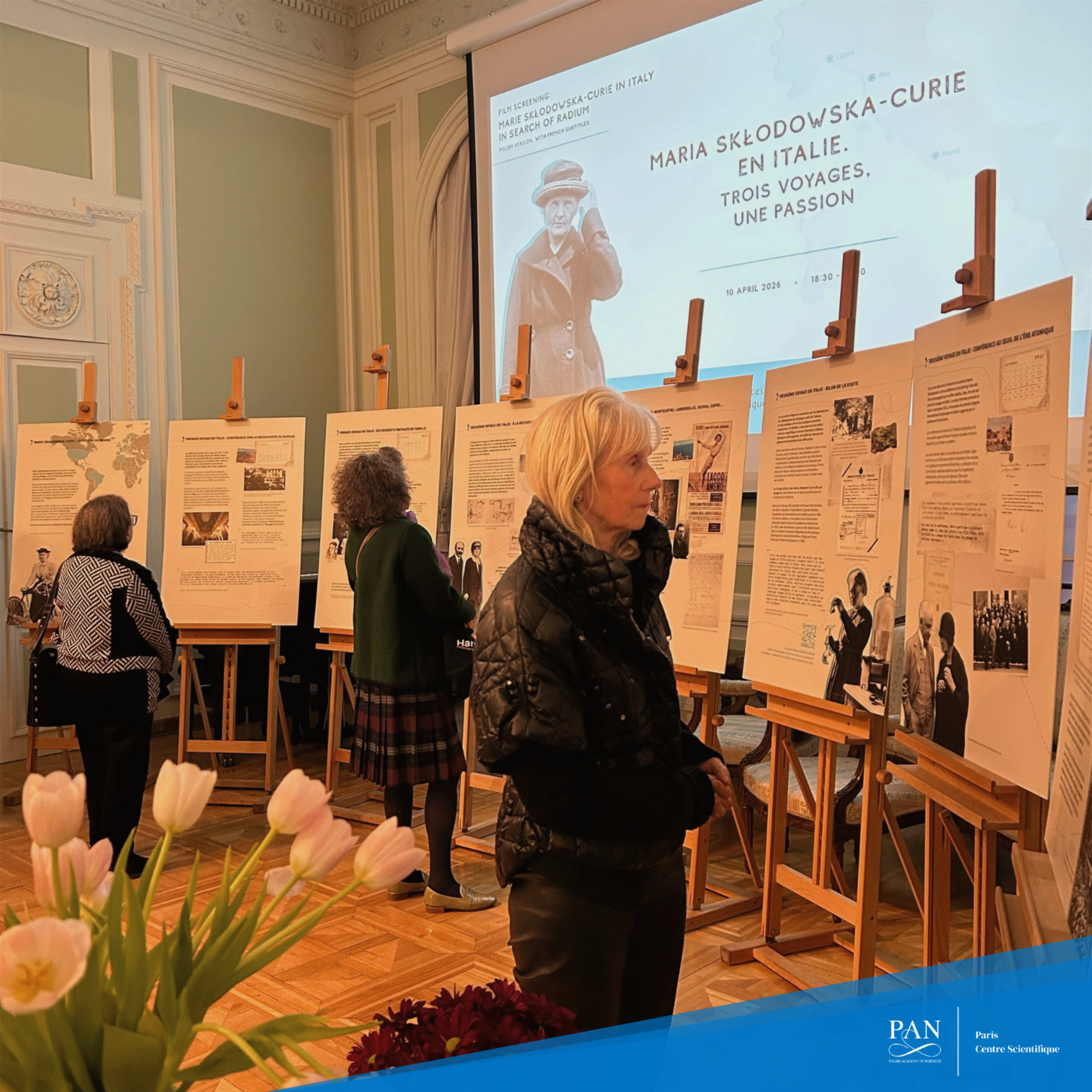
The event concluded with a screening of the film “Maria Skłodowska-Curie in Italy in Search of Radium”, which was produced by the Polish Academy of Sciences Scientific Centre in Rome, the Institute of Organic Chemistry of the Polish Academy of Sciences, the Department of Chemistry and Industrial Chemistry at the University of Pisa, and the Maria Skłodowska‑Curie Museum in Warsaw.
The exhibition is presented at the Polish Academy of Sciences Scientific Centre in Paris (74 rue Lauriston, 75116 Paris) from 10 April to 29 May 2026.
All visitors are welcome between 9:45-13:00 and 14:00-16:30.