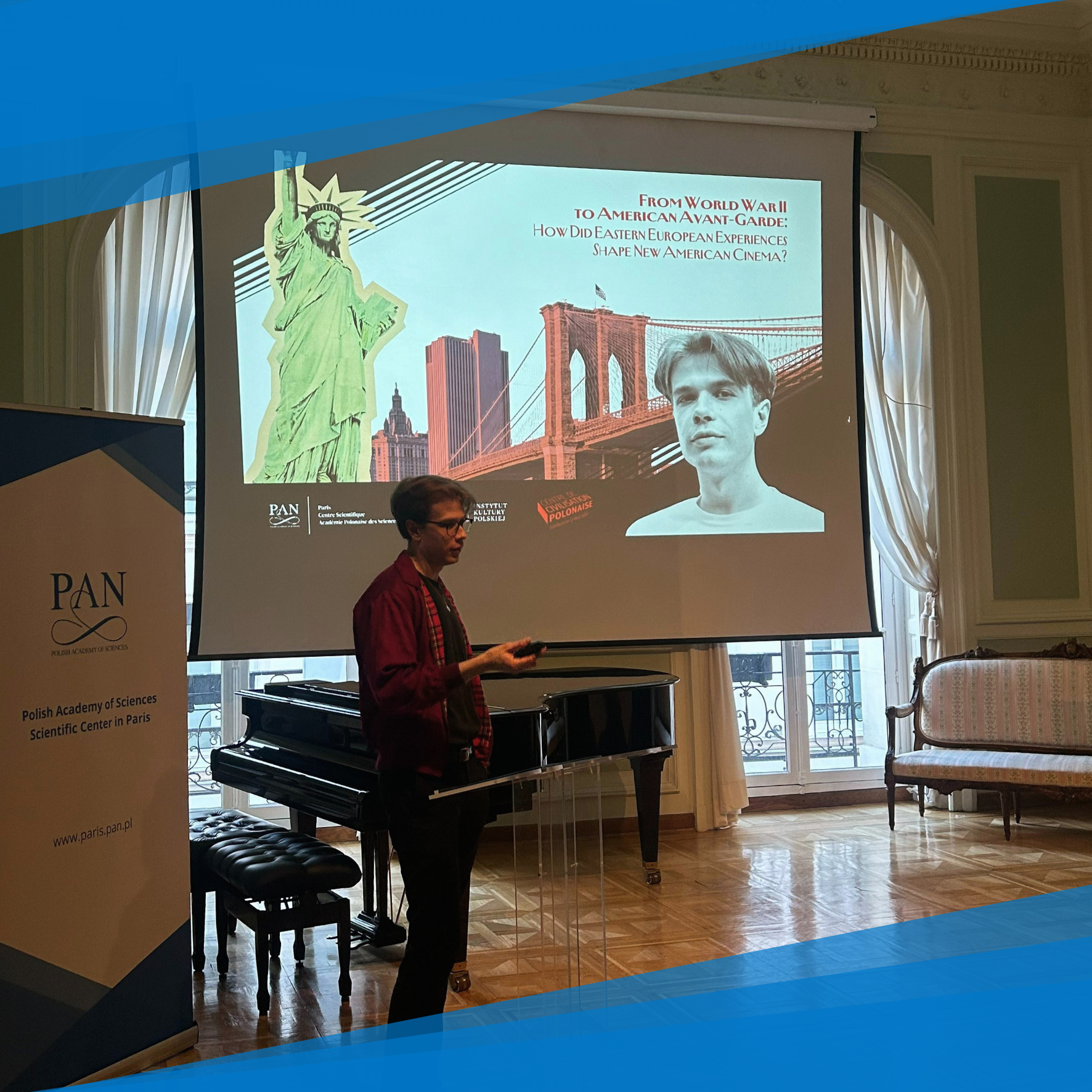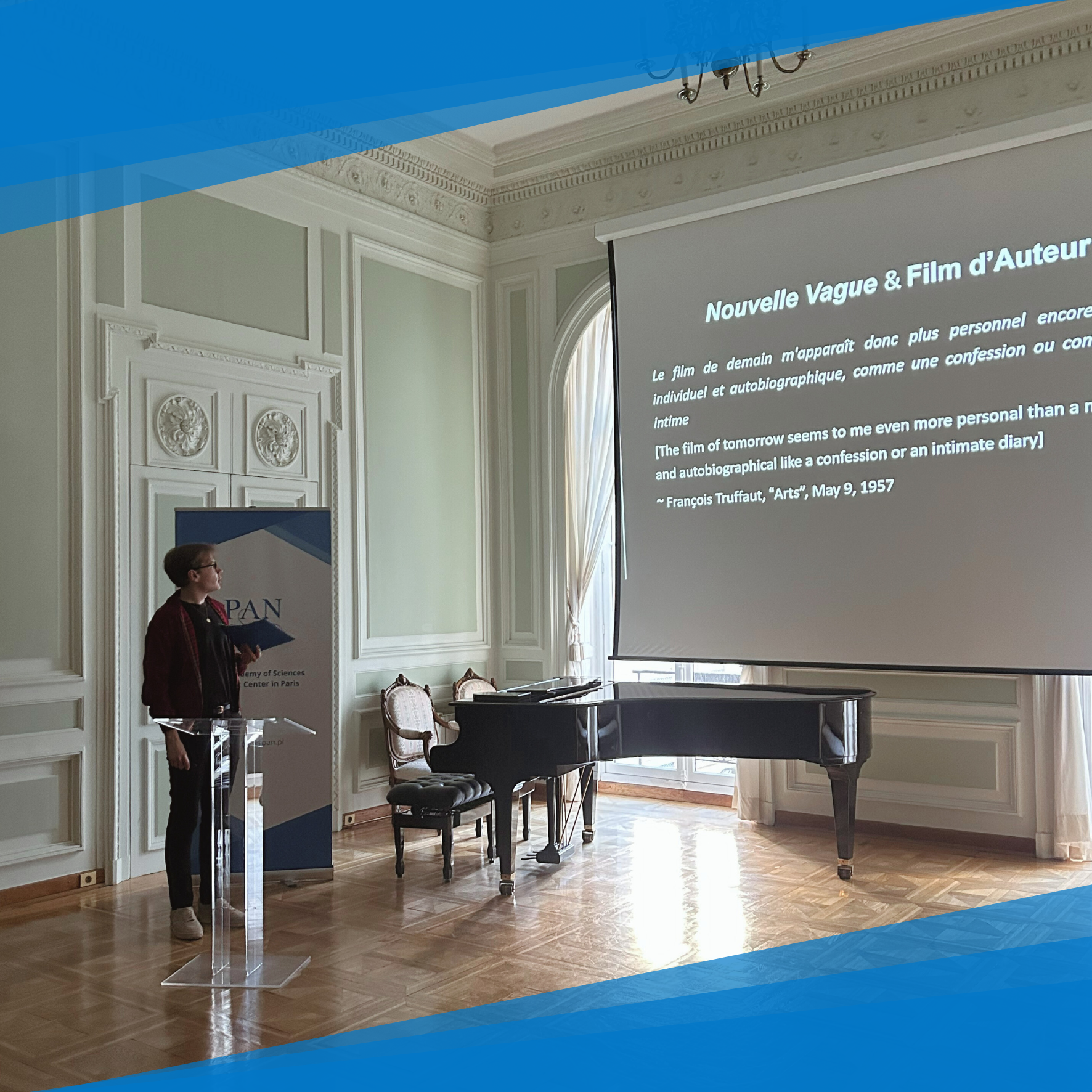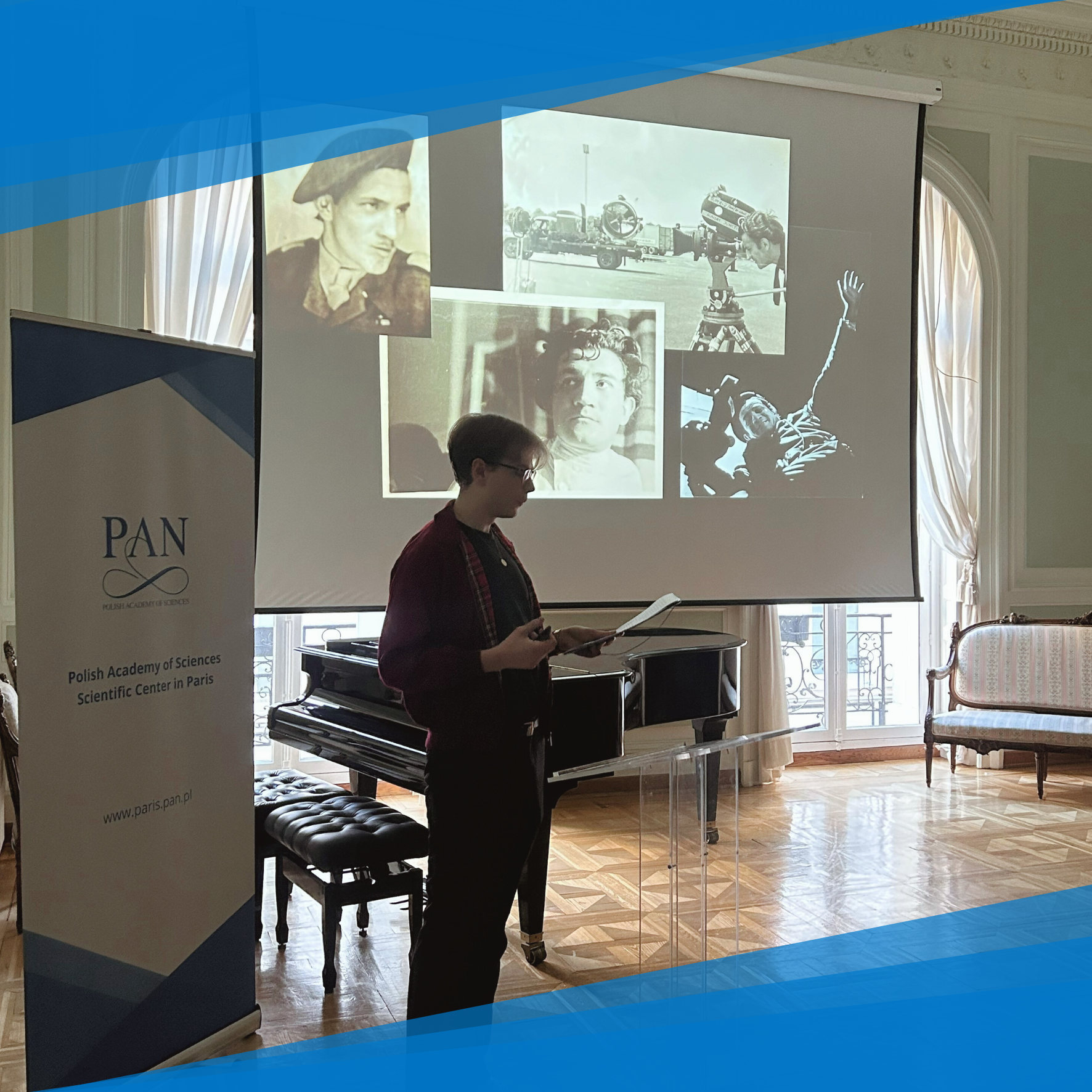


The lecture From World War II to American Avant-Garde: How Did Eastern European Experiences Shape “New American Cinema”?, held on April 10, 2025, and delivered by young scholar Łukasz Kiełpiński (University of Warsaw, University of Toronto), focused on the influence of Eastern European migrants’ experiences on the formation of New American Cinema, as well as on the broader context of postwar avant-garde film in the United States.
As the lecturer emphasized, the New American Cinema, which emerged in New York in the 1950s–70s, did not follow a uniform aesthetic style. What defined it were shared values: artistic independence, intimacy, and creative freedom. The movement distanced itself both from classical Hollywood and the earlier American avant-garde of the 1940s, offering new, highly personal forms of cinematic expression. A key figure in this environment was Jonas Mekas, a Lithuanian poet who, after fleeing Nazi-occupied Lithuania, ended up in a labor camp in Germany and later emigrated to the United States. Fascinated by New York, Mekas began his artistic career there as a filmmaker and critic. His autobiographical films, such as Walden (1969), Reminiscences of a Journey to Lithuania (1972), and Lost Lost Lost (1976), reflect both the personal experiences of a migrant and the atmosphere of American counterculture. During this time, Mekas also co-founded the magazine Film Culture, which served as an intellectual platform for debates on the role of auteur and personal cinema, inspired in part by the French Nouvelle Vague. It was in this context that the ideas behind the New American Cinema took shape.
A co-founder of Film Culture and a significant, though now largely forgotten, participant in those debates was Edouard de Laurot, also known as Edward Laudański. De Laurot, a Polish-born theorist and filmmaker, represented a different vision of cinema from that of Jonas Mekas. For de Laurot, film was meant to be a stimulus for social engagement and a renewal of universal values. In texts such as Towards a Theory of Dynamic Realism (1955), he advocated for combining personal experience with a broader political and historical context. His films, including Listen, America! (1967) and Black Liberation/Silent Revolution (1971–72), created in collaboration with Malcolm X and Black Panther activists, offered a radical alternative to the individualism of New American Cinema. The conflict with Mekas, which culminated during the making of Guns of the Trees, ultimately ended their collaboration.
In his lecture, Łukasz Kiełpiński demonstrated that the artistic dispute between Jonas Mekas and Edouard de Laurot stemmed from ethical and aesthetic dilemmas rooted in their differing understandings of the artist’s role in the world.