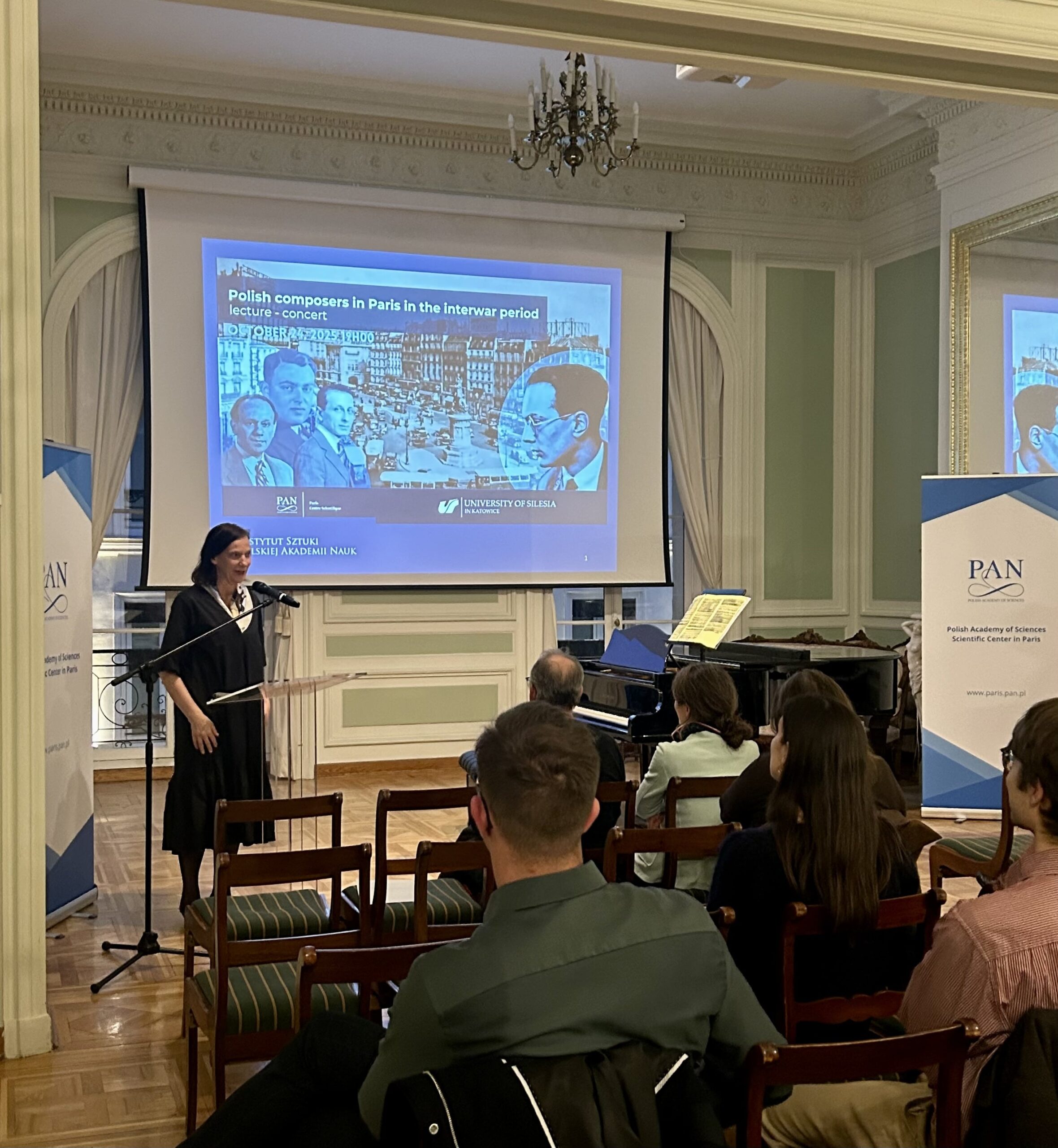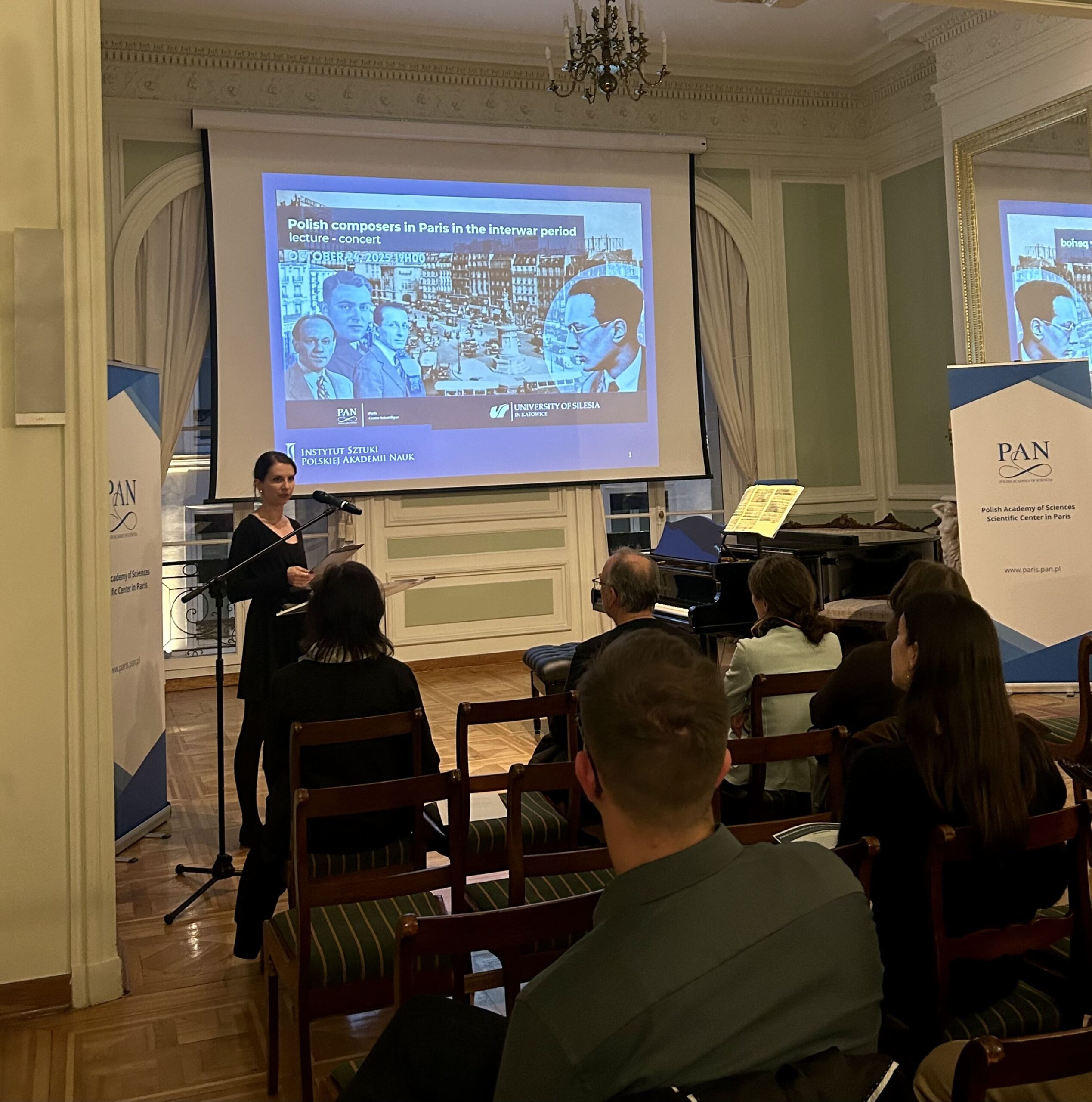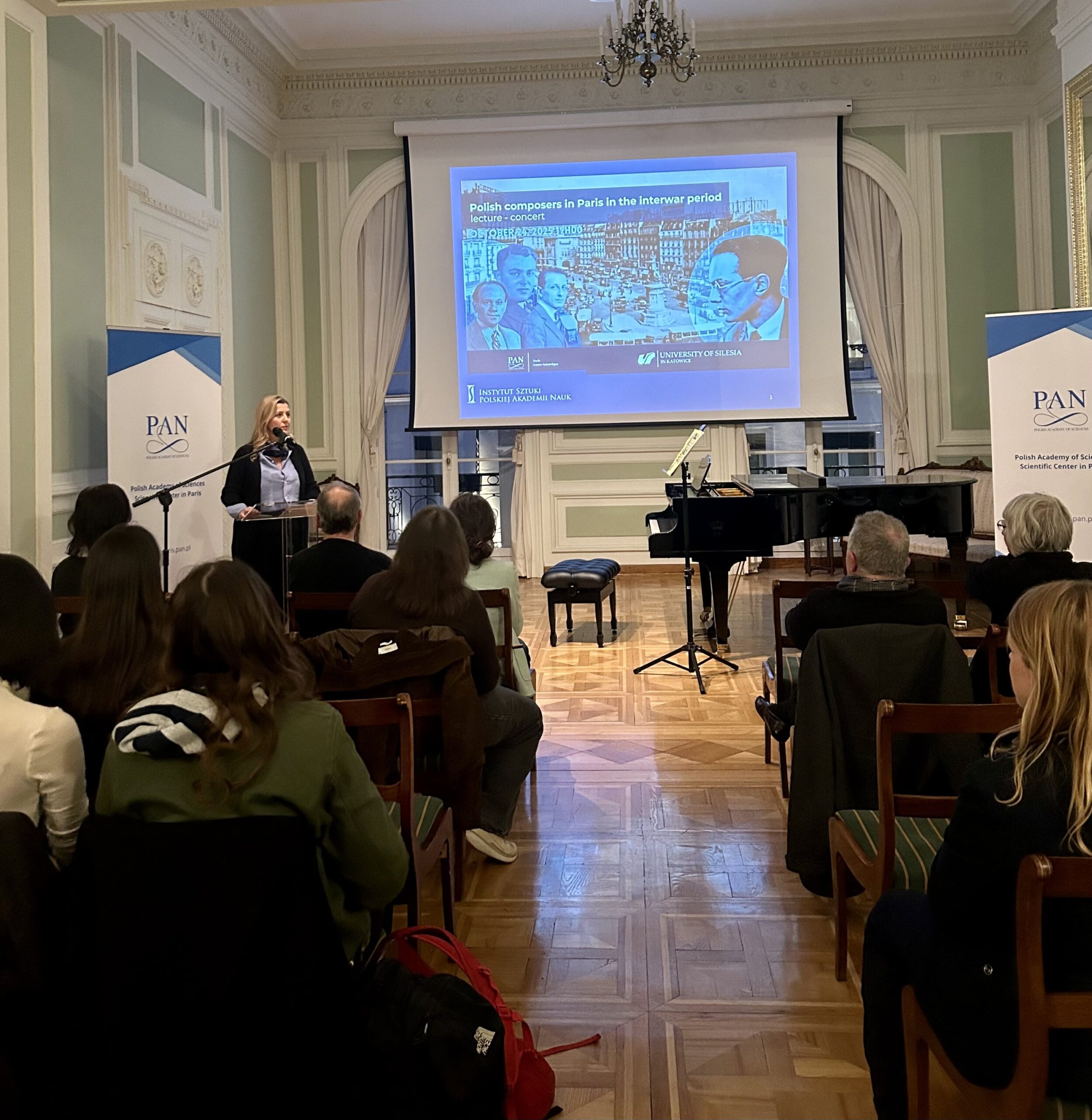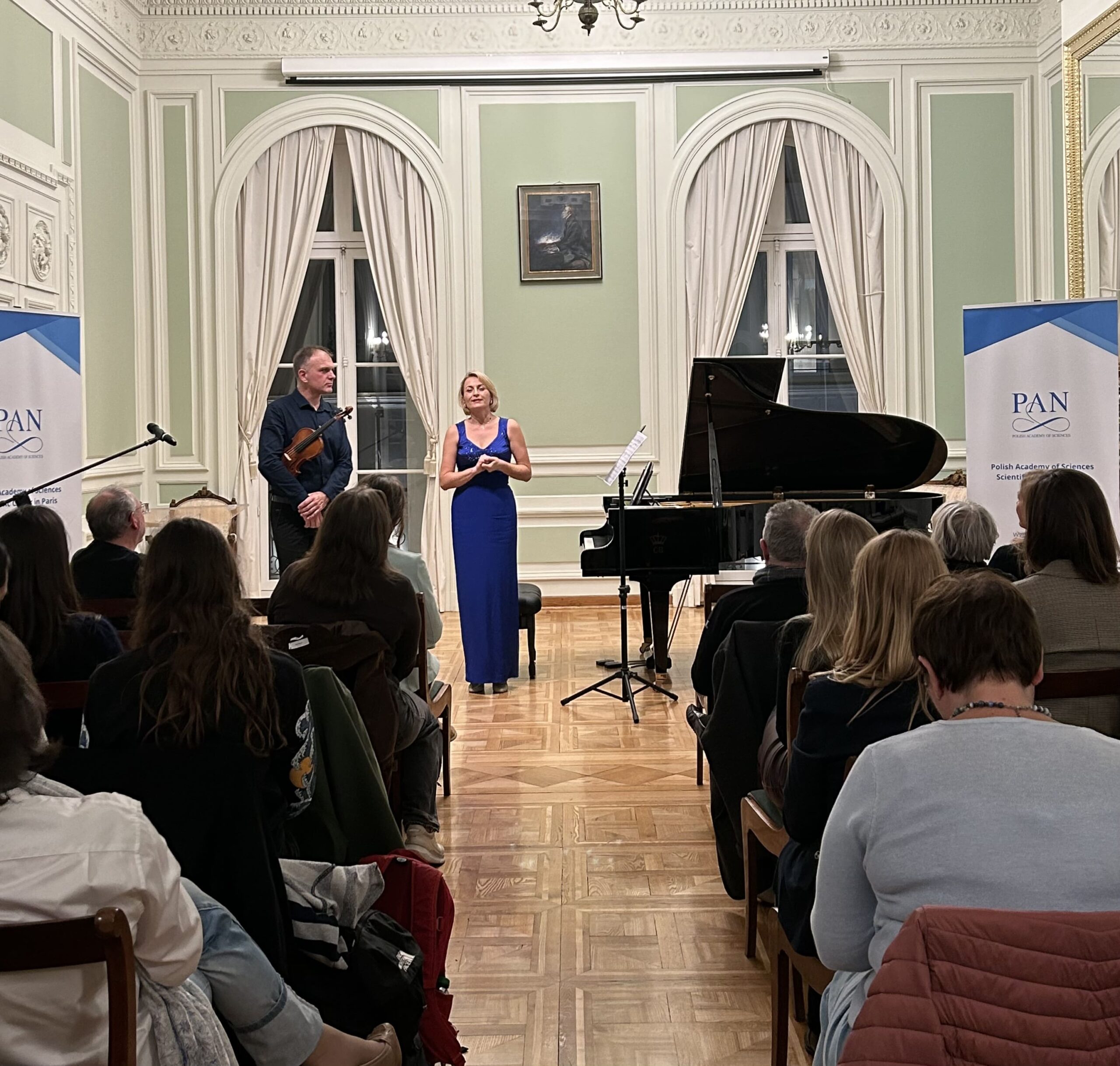


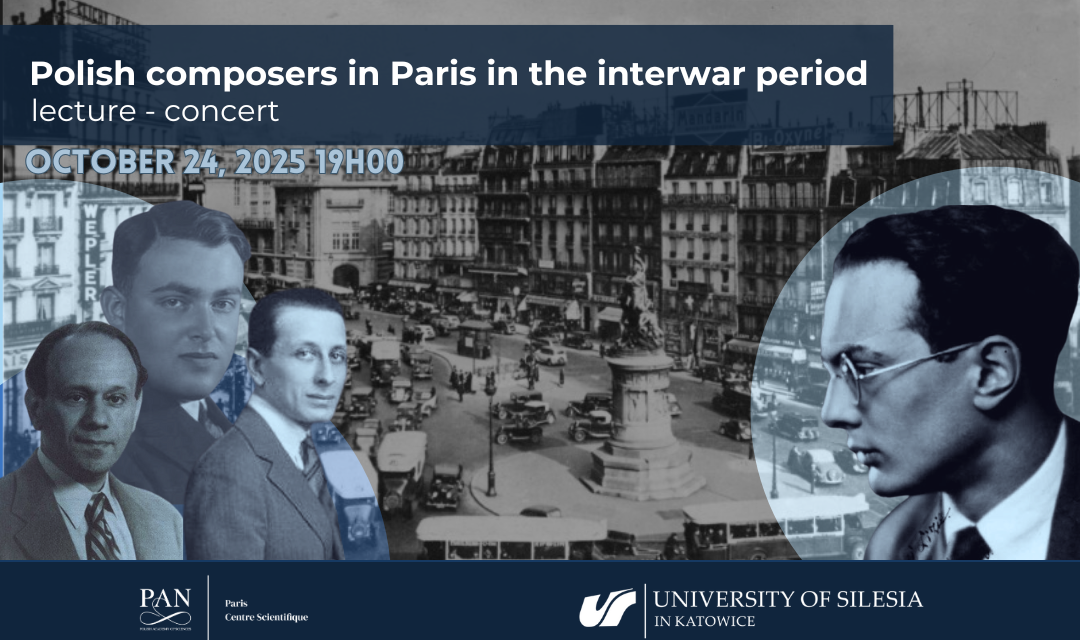
On October 24th, at the Polish Academy of Sciences Scientific Station in Paris, a unique scientific and musical event took place, dedicated to the works of Polish émigré composers active during the interwar period.
The program consisted of a lecture and a concert, which together showcased the richness and diversity of Polish music from the early 20th century.
The evening began with a lecture by Professor Jolanta Guzy-Pasiak – a musicologist and head of the “Polish Music Abroad” department at the Institute of Art of the Polish Academy of Sciences. In her presentation, she introduced the audience to the profiles of Polish composers who created while in exile, with particular emphasis on Karol Rathaus. The speaker highlighted the significance of their work for 20th-century musical culture and the challenges these artists faced in the political and social context of their time.
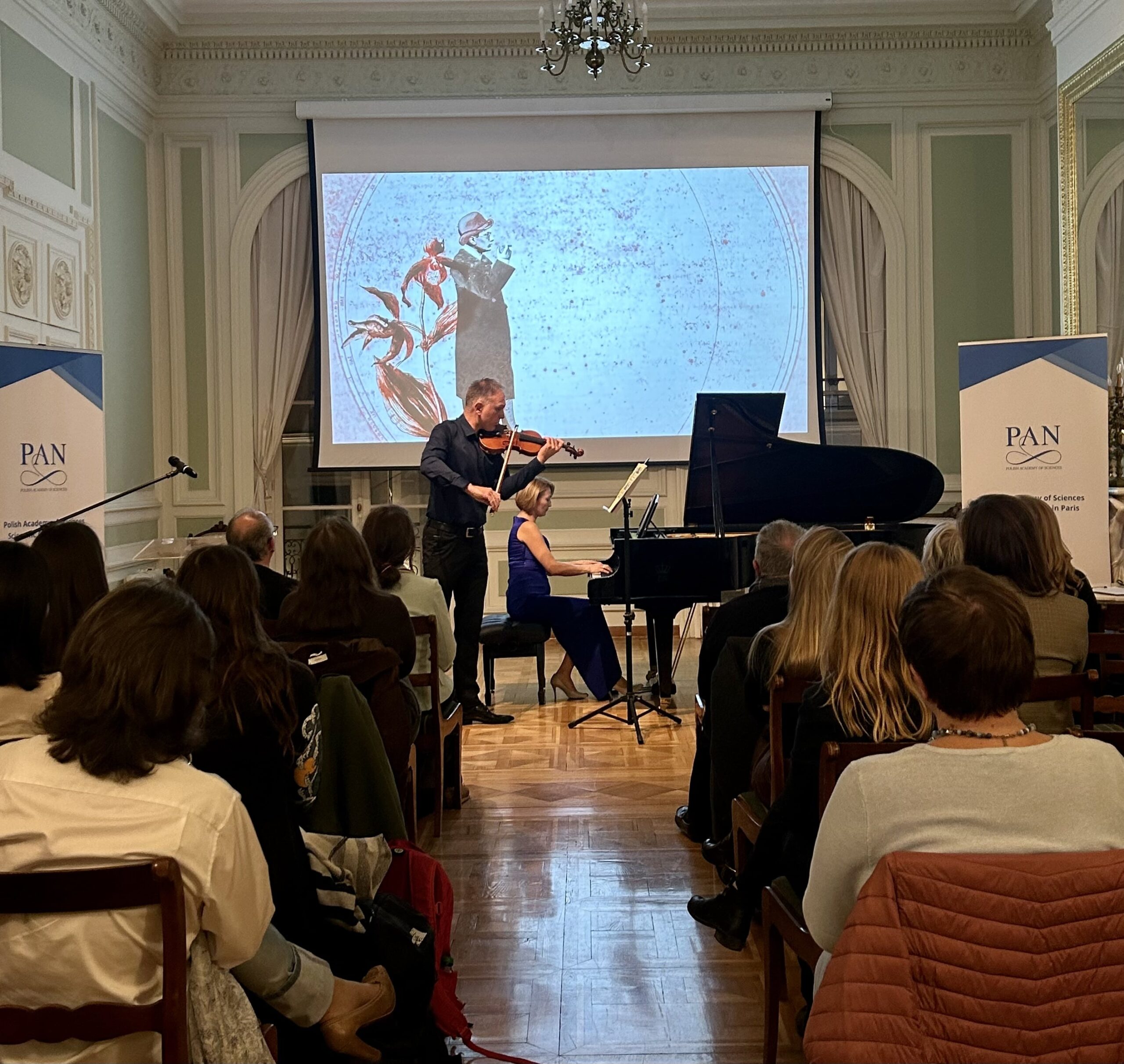
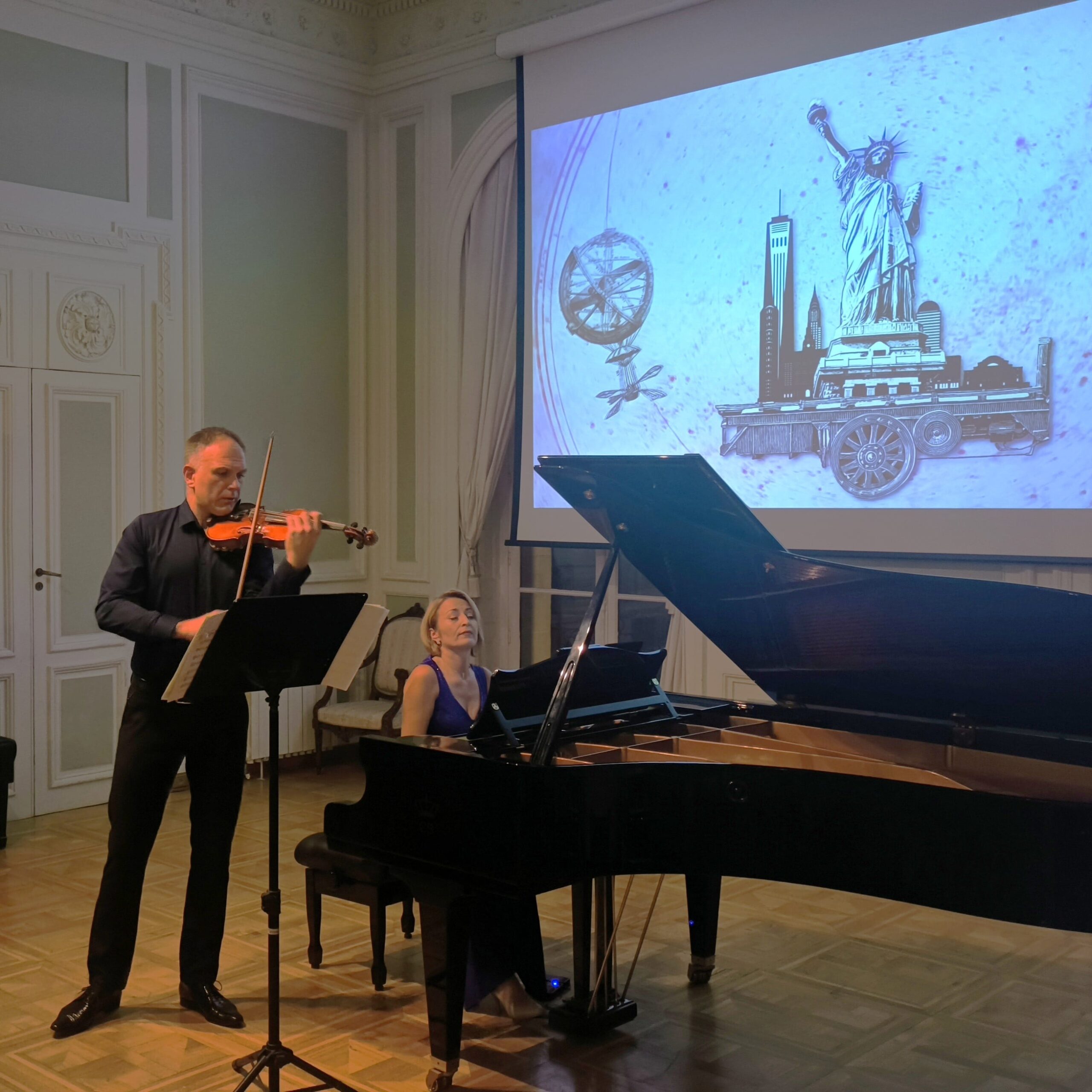
Following the lecture, a concert was performed by the Hałat Ensemble, composed of pianist Dr. Aleksandra Hałat and violinist Dr. Marcin Hałat. The artists presented a repertoire featuring works by composers such as Karol Rathaus, Tadeusz Zygfryd Kassern, and Alexandre Tansman. A special highlight of the program was the inclusion of archival pieces by Jerzy Fitelberg, researched by the performers and revived in Paris for the first time since the interwar period. The piece Prelude (1938) was accompanied by a digital animation depicting a summary of Jerzy Fitelberg’s life (created by Iwona Pom and Kaja Renkas).
The Hałat Ensemble’s performances combined classical interpretation with elements of improvisation, creating a bridge between the past and the present. The audience had the opportunity to experience not only the artistic aspect but also to reflect on the fate of Polish émigré composers.
The event attracted a wide audience, and one of the distinguished guests who honored the evening with her presence was Mireille Tansman Zanuttini, daughter of composer Alexandre Tansman.