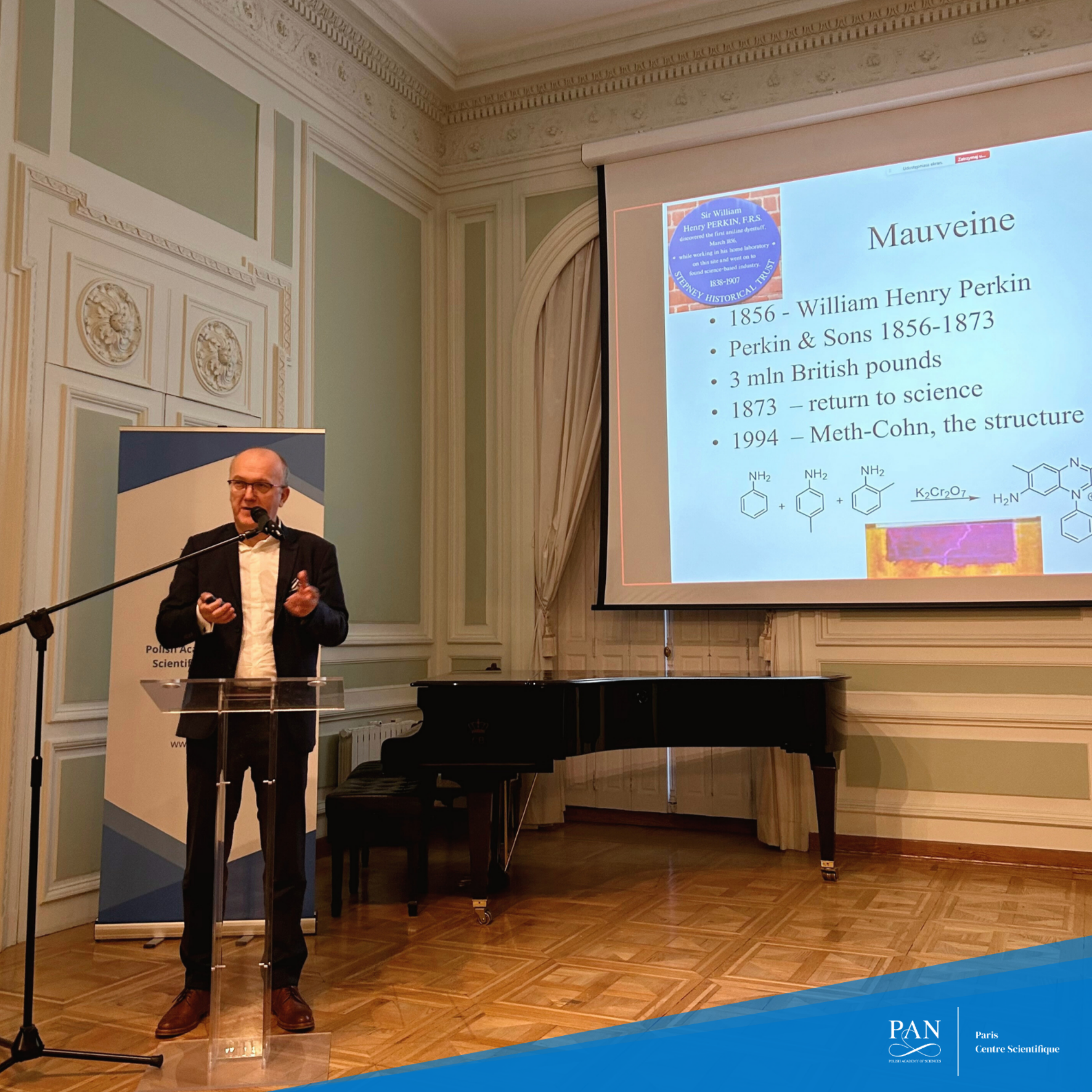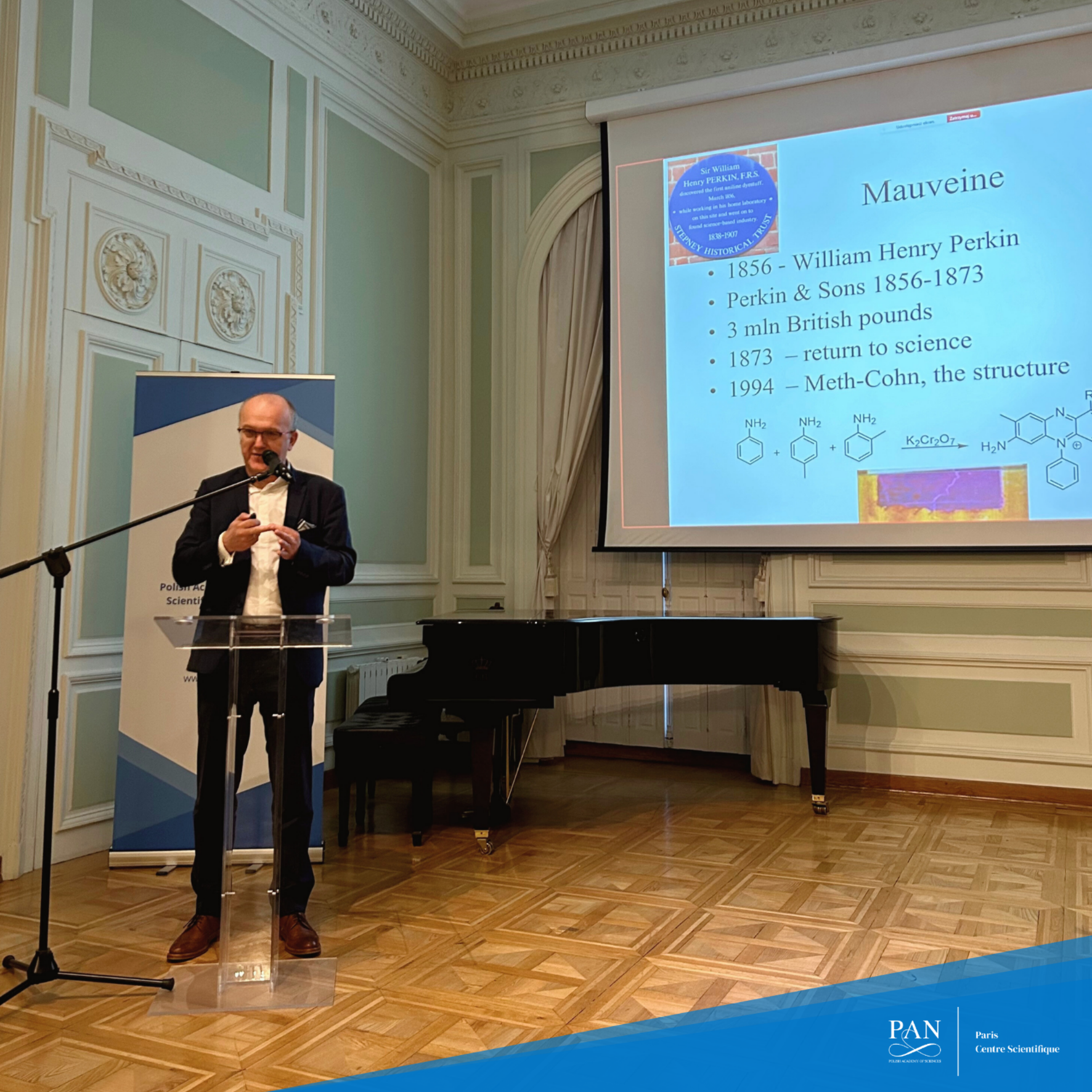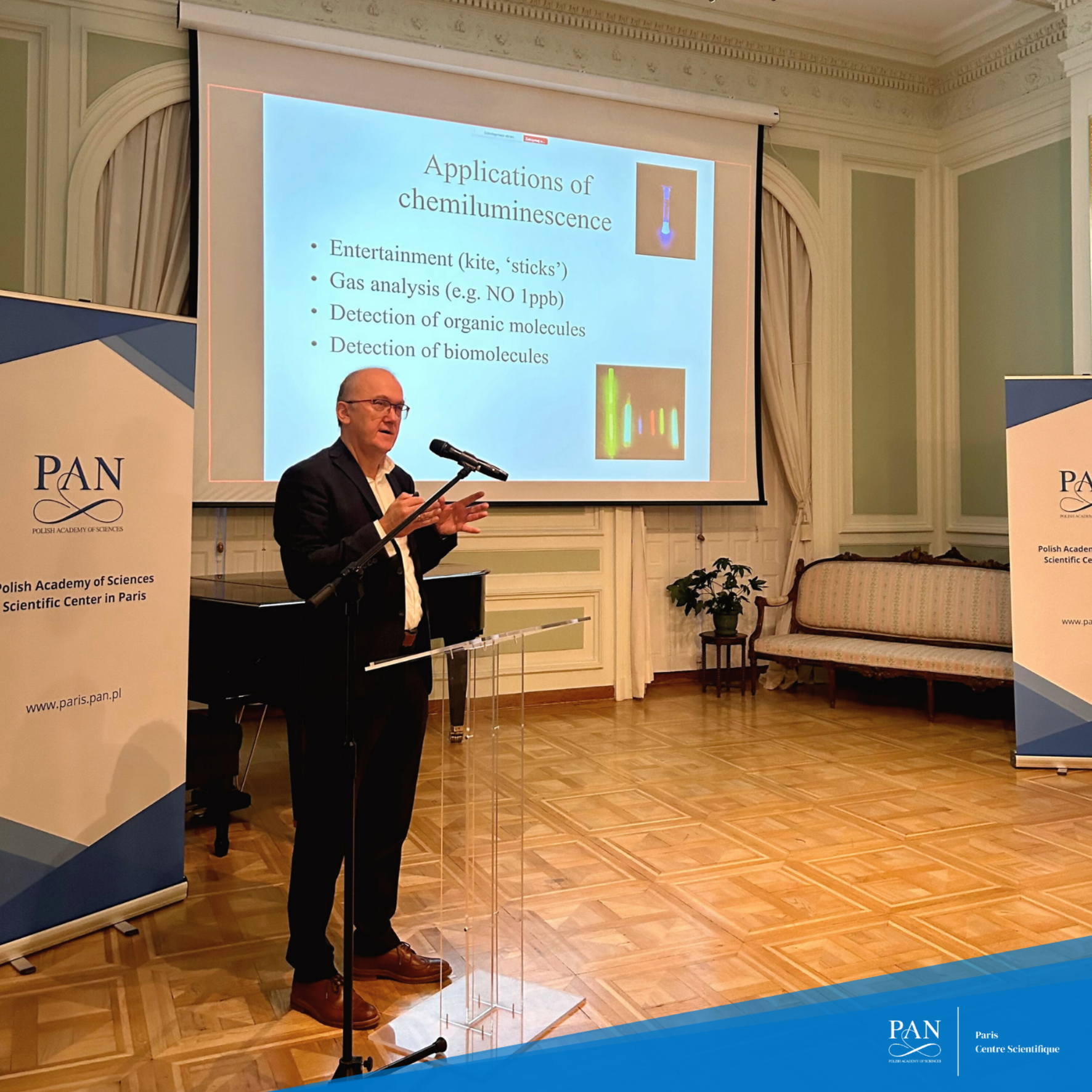


The lecture The Hidden Life of Functional Dyes, delivered by the distinguished Polish scientist Prof. Daniel Gryko from the Institute of Organic Chemistry of the Polish Academy of Sciences, focused on the fascinating topic of functional dyes – substances which, unlike traditional dyes that merely provide color, play an essential role in modern technologies and medicine. The speaker began by comparing the two groups of dyes, emphasizing that traditional dyes have a single purpose: to add color. Functional dyes, on the other hand, can – among other things – emit light in the near-infrared range, enabling their use in biological imaging and diagnostics.
During the lecture, Prof. Gryko presented the latest discoveries in the field of fluorophores – light-emitting chemical compounds – and discussed new heterocyclic structures, some of which hold great potential for applications in diagnostic tests, cellular imaging, and photodynamic therapy (PDT) used in cancer treatment. He highlighted that, although we rarely notice their presence, functional dyes are widely used in medical devices and procedures, and their importance continues to grow.
In the discussion that followed, participants raised questions about the toxicity of dyes in everyday objects, challenges related to photodynamic therapy using two-photon excitation, and mechanisms that allow dyes to selectively bind to specific biological structures. The speaker explained that dye engineering requires precise molecular design, taking into account factors such as electrostatic interactions, membrane properties, and the presence of specific functional groups.
The lecture demonstrated how far this field has evolved – from simple colorants to advanced molecules used in medicine and technology. Today, we are witnessing a dynamic development of this family of compounds, which can significantly improve quality of life, and their “hidden life” is becoming increasingly visible in science and practice.