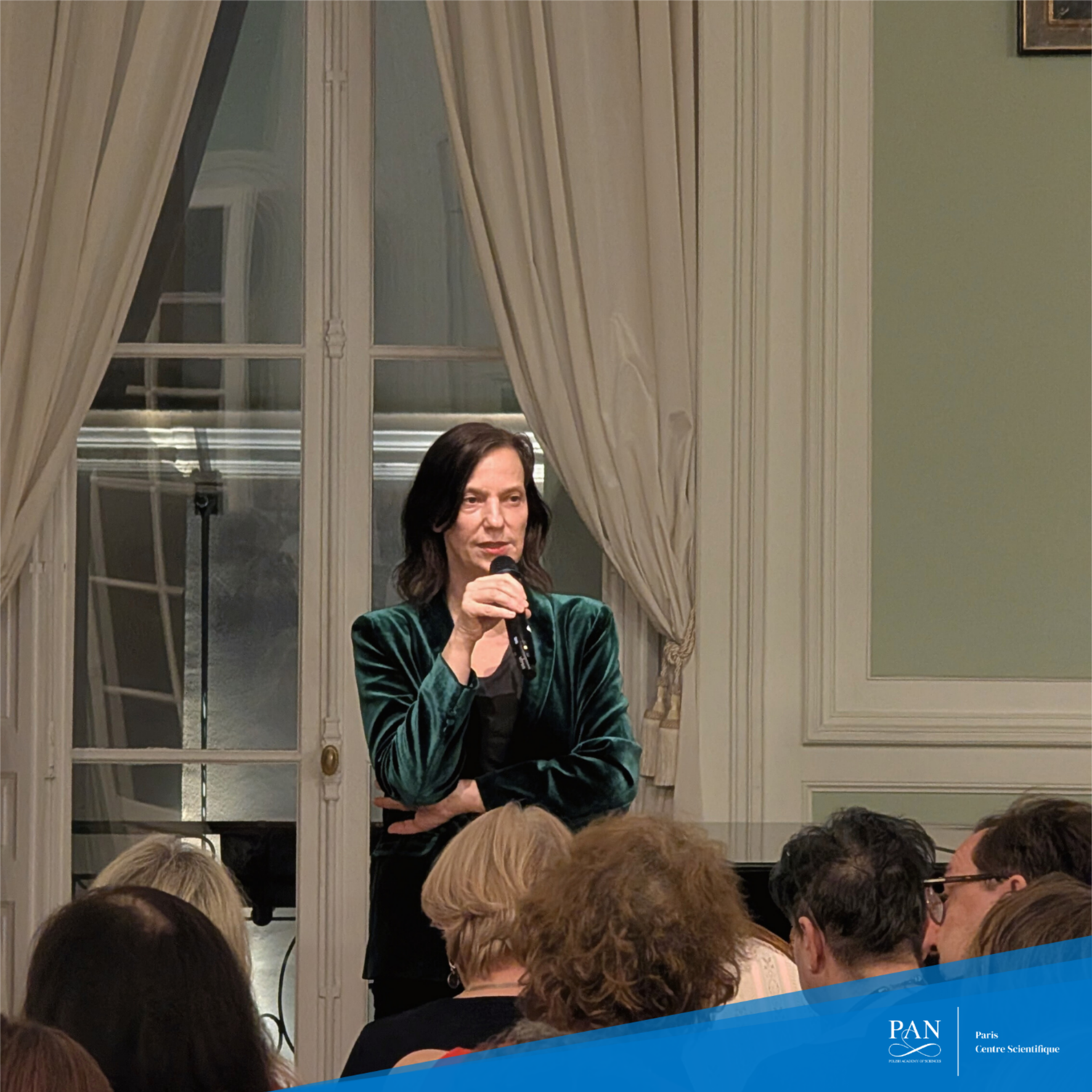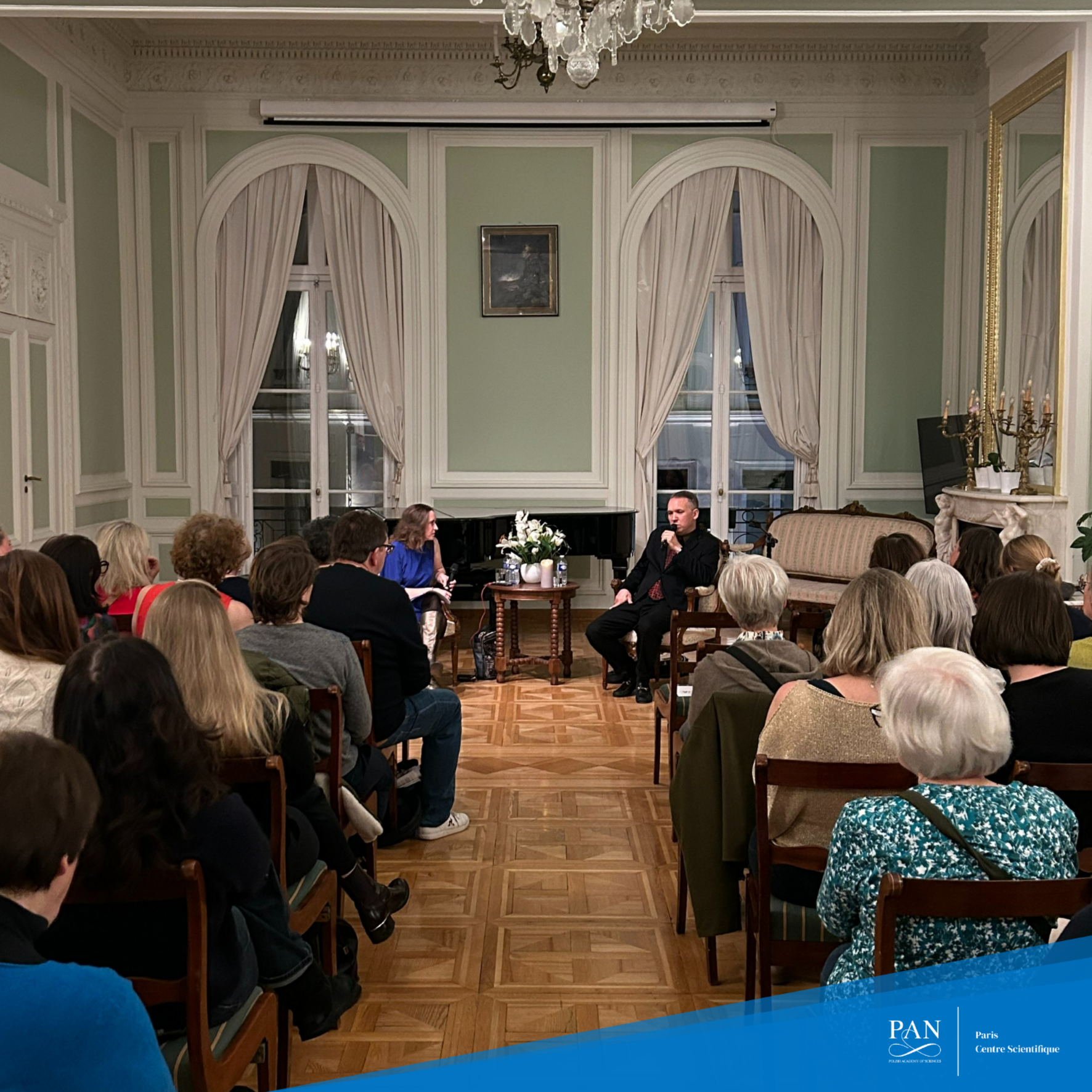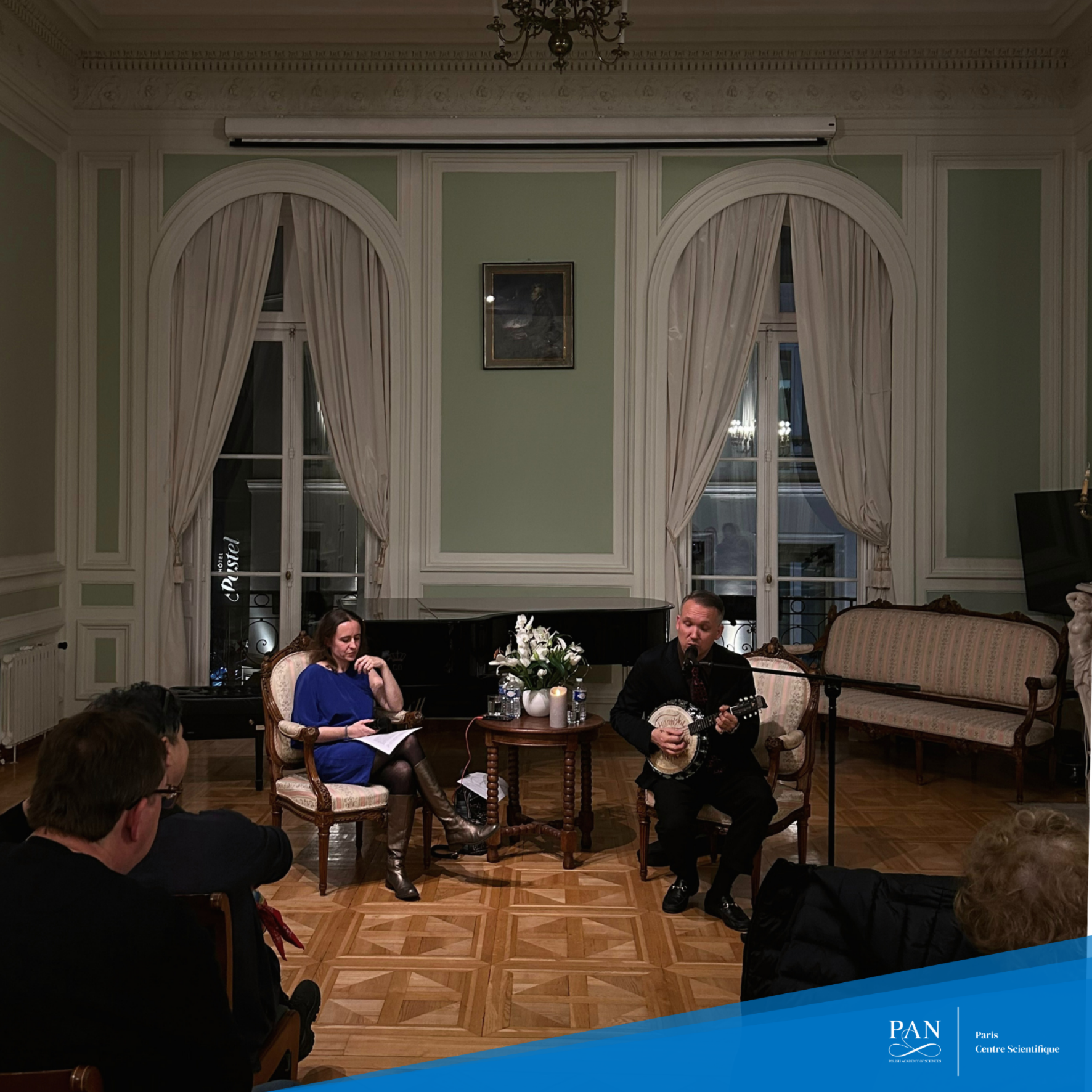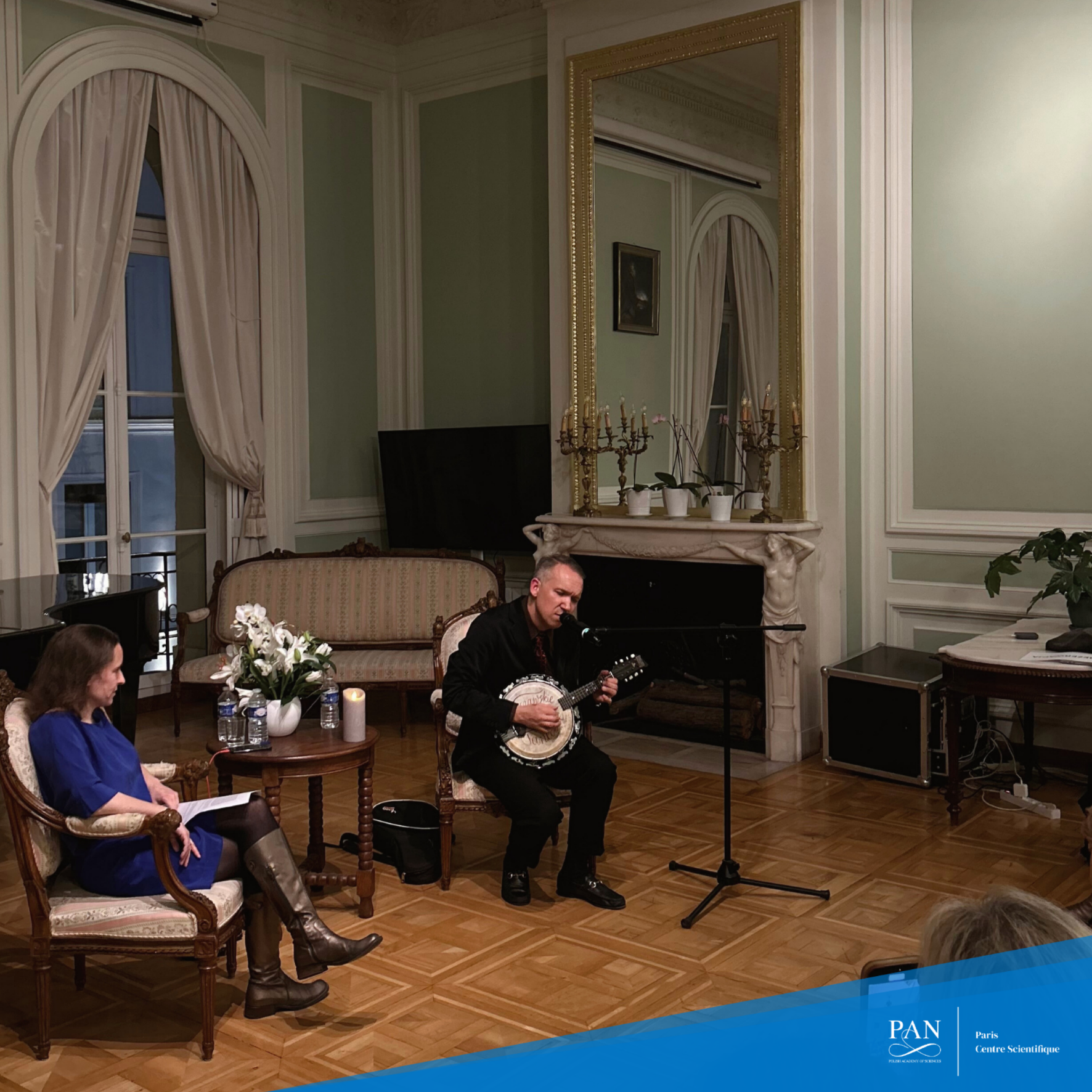


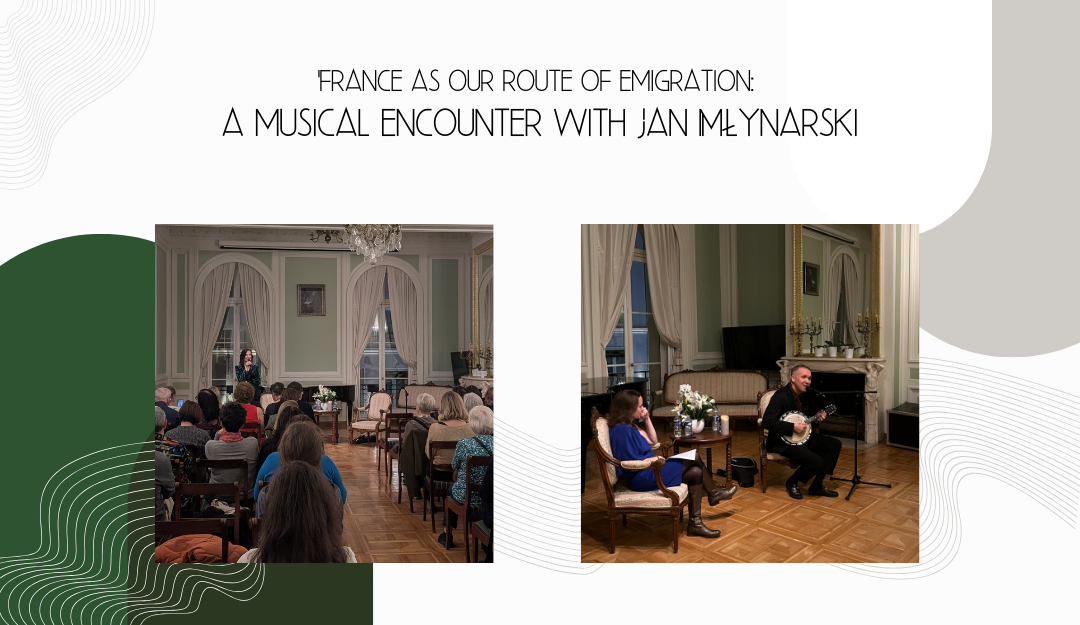
On December 10, the Polish Academy of Sciences Scientific Centre in Paris hosted a musical meeting with Jan Emil Młynarski. The event was co-organized by ADDP (Association for the Defense of Democracy in Poland, based in Paris) as part of the project “Café Polska Europa: France on Our Emigration Route”, together with the Open Dialogue Foundation, and was funded under the patronage of the Senate of the Republic of Poland for the Polish community abroad in 2025.
The evening featured a presentation by Jan Emil Młynarski, who shared stories about the history of Warsaw’s cultural life, interspersed with live performances on the mandolin-banjo. The narratives referred to the interwar period, cabarets, dance halls, and salons, as well as the lives of figures associated with Polish and international culture, such as Adrianna Godlewska, Andrzej Włast (Gustaw Baumritter), Alfred Szer, Henryk Wars, Stanisław Grzesiuk, Marian Hemar, Wojciech Młynarski, and Edith Piaf. References were also made to Lviv, Israel, Hollywood, and Australia.
Jan Emil Młynarski is a drummer, music producer, vocalist, and radio host specializing in the history of Warsaw, particularly during World War II and the post-war period. He is a recipient of music awards including the Fryderyk, the City of Warsaw Award, and the “Mateusz” Award from Trójka. He graduated from the Drummers Collective school in New York. He is the leader of music projects in the fields of independent, experimental, and jazz music, and the founder of the Warsaw Dance Combo, where he performs traditional Warsaw songs. He recorded the album Młynarski Plays Młynarski, dedicated to the work of his father, Wojciech Młynarski. Together with Marcin Masecki, he co-founded Jazz Band Młynarski-Masecki, which performs pre-war dance repertoire. In 2024, he released his first solo percussion album, Gambit. Since 2018, he has hosted the radio program Salon, Ulica, Dancing, dedicated to Polish popular music up to 1949. He is also a member of an expert team at the Warsaw City Culture Bureau, where he works on safeguarding intangible heritage, highlighting, among other things, the significance of Polish tango as a cultural asset.